
Hiking Gear for Men: The Complete List (Day Hike to Backcountry)
Disclosure: This post may contain affiliate links. I may earn a small commission if you click a link or make a purchase, at no additional cost to you. See my disclosure for more info.
Most men who hike have the same gap in their kit: the stuff they’d know to buy on day one (boots, a pack), but not the stuff that actually makes the difference on mile eight (a lightweight chair for breaks, a satellite communicator when there’s no cell signal, poles that save your knees on the descent). This guide covers the full range — from what you need on your first trail to what serious hikers carry when they’re three days from a road. Organized in ascending order of seriousness, so you can stop at whatever level matches where you’re at.
OUR TOP PICKS

OUR PICK — POLES
Cascade Mountain Tech Trekking Poles
14,197 reviews at 4.6 stars. Cork grip, quick-lock, under $40. The best-value poles on Amazon.
See it on Amazon
OUR PICK — WATER
LifeStraw Personal Water Filter
124,342 reviews at 4.8 stars. Filters up to 1,000 gallons. The most-reviewed filter on Amazon.
See it on AmazonSHOP THE FULL LIST
Men’s Hiking Gear — All on Our Amazon Storefront
Every pick in this guide, curated in one place.
Browse Our Hiking Gear List →Level 1: The Basics (Every Man Needs These)
These are the items that separate a good day on trail from a rough one. None of them are exotic. All of them matter.
Trekking Poles
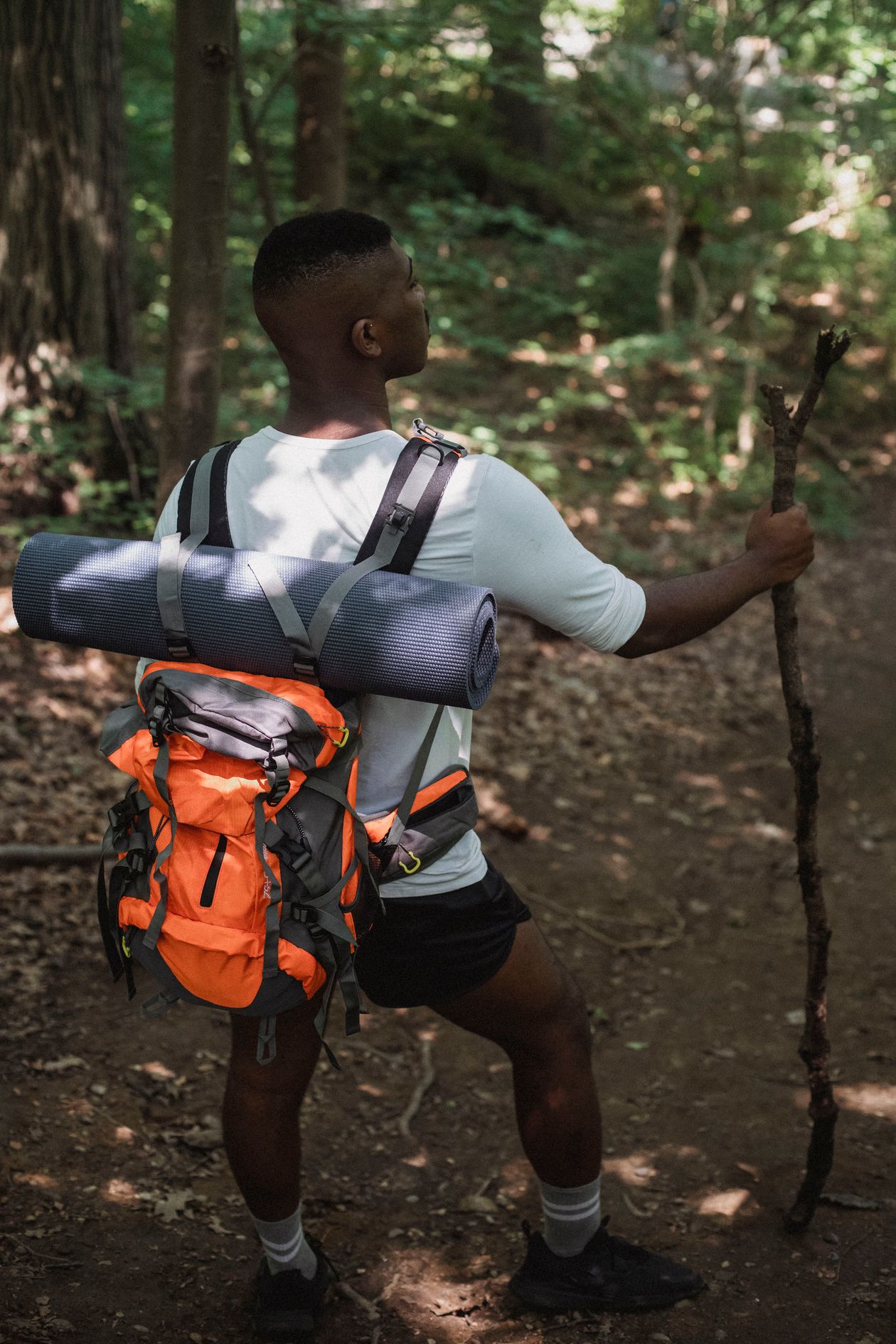
The item most men skip and then regret within the first major descent. Poles reduce knee impact by 25% going downhill, give you a third and fourth point of contact on loose terrain, and at altitude where your legs tire faster than normal, they shift load to your arms and make the climb significantly more manageable. Most people who try them once don’t hike without them again.
Cascade Mountain Tech Trekking Poles
14,197 reviews | 4.6 stars
Why we pick these: The most-reviewed trekking poles under $40 on Amazon, and genuinely one of the best values in hiking gear. Cork grip absorbs sweat, quick-lock sections tighten reliably, and they fold short enough to clip to a pack when you don’t need them. Aircraft-grade aluminum handles serious terrain.
The catch: The twist-lock mechanism can loosen mid-hike if you don’t seat each section firmly. Tighten them one click past where they feel done before hitting a steep downhill.
See it on Amazon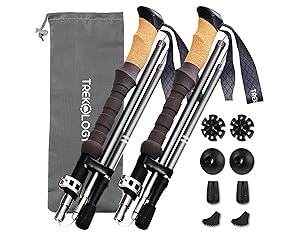
TREKOLOGY Trek-Z Trekking Poles
7,212 reviews | 4.5 stars
Also great: The step up if you want a folding pole instead of a collapsible one. Folds to carry length in seconds, cork grip, aircraft-grade aluminum. Slightly faster to deploy than twist-locks.
The catch: Folding poles have a fixed length — check the size range before ordering if you’re taller or shorter than average.
See it on AmazonWater Filtration
On any trail longer than three miles, you need more water than you can comfortably carry from the trailhead. Lakes and streams in most national parks and wilderness areas are plentiful but untreated. A filter lets you drink from any source without carrying the weight.
LifeStraw Personal Water Filter
124,342 reviews | 4.8 stars
Why we pick this: 124,342 reviews at 4.8 stars is not an accident. The LifeStraw filters up to 1,000 gallons, removes 99.999% of bacteria and parasites, and weighs 2 ounces. You drink directly through it like a straw, or attach it to a water bottle. The most-reviewed water filter on Amazon for a reason.
The catch: Doesn’t filter viruses (rare in US backcountry but worth knowing) or chemicals. For most North American trails it’s more than sufficient.
See it on Amazon
LifeStraw Peak Series Water Filter
5,349 reviews | 4.7 stars
Also great: The upgraded version with a squeeze bag system — fill the bag from a stream, squeeze through the filter into your bottle. Faster flow rate than the original, works better in cold temperatures, and filters to an even higher standard.
The catch: The squeeze bag can be tricky to dry completely, which matters for long trips. Blow air back through it after use.
See it on AmazonSun Protection: UPF Hoodie

2,630 reviews | 4.7 stars
Why it matters: Above treeline, UV exposure is significantly stronger than at sea level. A UPF 50+ long-sleeve hoodie blocks 98% of UV rays, breathes better than a t-shirt on hot exposed ridges, and doubles as a light layer when temps drop. Most men reach for sunscreen and skip sun clothing — sun clothing wins on a full day of hiking.
The catch: Runs slightly slim. Size up if you’re between sizes or plan to layer under it.
See it on AmazonEmergency Rain Poncho

Hagon PRO Rain Ponchos — 5 Pack
17,942 reviews | 4.5 stars
Why we include this: A packable rain jacket is the right answer for frequent hikers. But a 5-pack of these disposable ponchos lives in the bottom of a pack and weighs almost nothing — cover your pack and yourself in the same piece when a storm rolls in faster than expected. 17,942 reviews means a lot of hikers have been glad they had them.
The catch: These are emergency backup, not a substitute for a real rain layer. If you hike regularly, buy a packable jacket too.
See it on AmazonLevel 2: The Full Day Hike Kit
Once you’ve got poles and a water filter sorted, these are the items that round out a proper day hike. Small individually, significant collectively.
First Aid Kit

Atickyaid Mini First Aid Kit — 140 Pieces
1,715 reviews | 4.7 stars
Why you need it: Blisters, cuts, ankle rolls, and muscle pulls are the most common trail issues — all handled by a basic first aid kit that fits in the top pocket of any daypack. 140 pieces covers everything from a hot spot on mile two to a real cut that needs closing before you hike out.
The catch: Mini kits don’t include everything for serious injuries. Know how to use what’s in the kit before you need it.
See it on Amazon
Mini First Aid Kit — 150 Pieces, Hard Shell
4,493 reviews | 4.8 stars
Also great: The step up — a waterproof hard-shell case that keeps everything organized and dry. Ten more pieces than the mini, and the rigid case means nothing gets crushed at the bottom of a pack. Worth the small extra bulk for multi-day trips or wet conditions.
The catch: Hard shell adds a bit more rigidity than a soft pouch — doesn’t compress to fit tight spots quite as easily.
See it on AmazonBinoculars
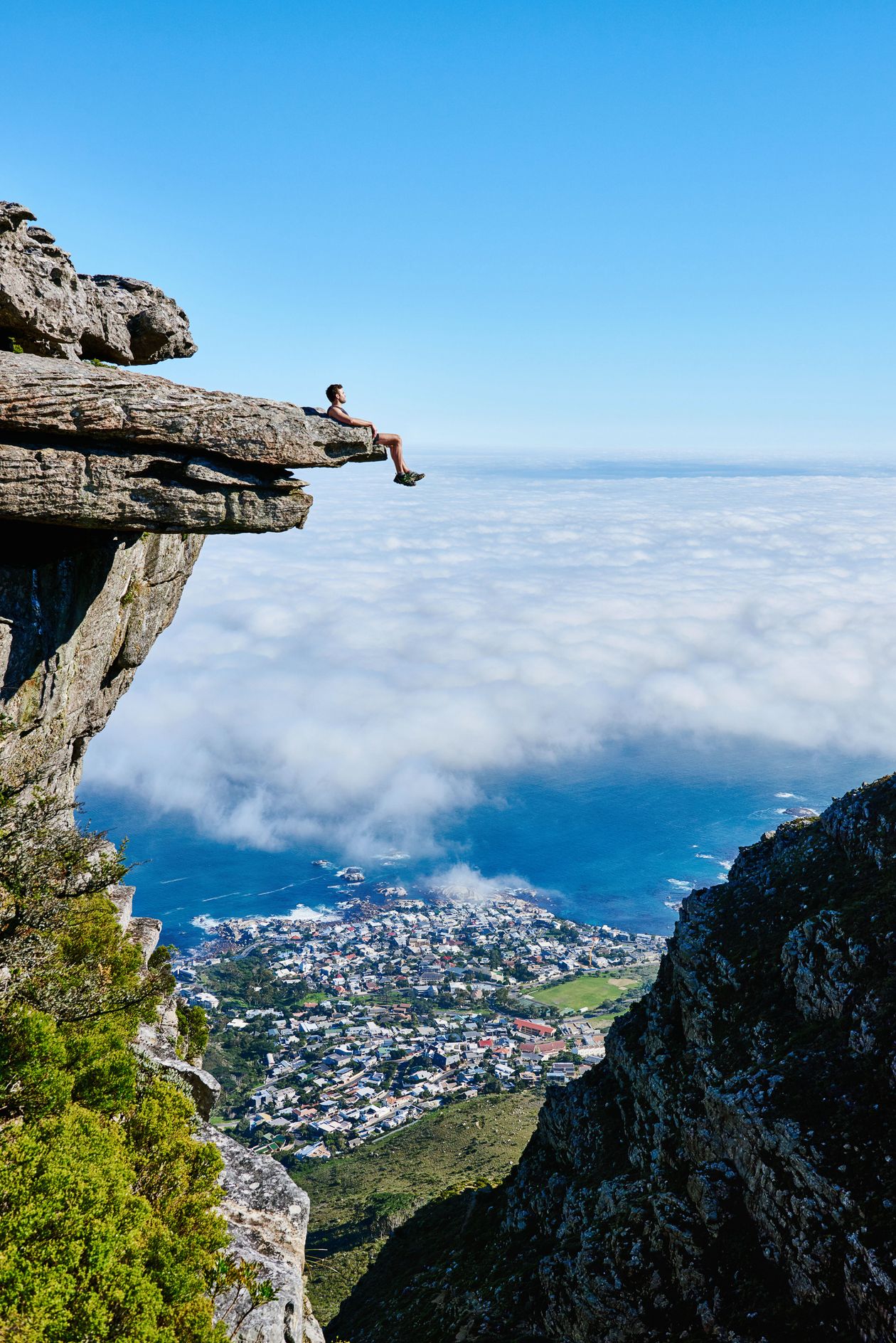
Most men don’t think to bring binoculars until they’re standing at an overlook watching a herd of elk 400 yards away with no way to see them clearly. Compact binoculars weigh almost nothing, fit in a pocket, and change how much you actually see on trail — wildlife, distant peaks, route-finding on switchbacks above you.

Occer 12×25 Compact Binoculars
33,162 reviews | 4.4 stars
Why we pick these: 33,162 reviews at 4.4 stars for a compact binocular is a strong signal. 12x magnification is the right power for trail use — enough to pick out wildlife and route details, not so powerful that hand shake makes the image useless. Waterproof, low-light vision, and small enough to fit in a shirt pocket.
The catch: At 12x, keeping the image steady without a tripod requires a moment to brace. Rest your elbows on something when glassing distant animals.
See it on AmazonLevel 3: The Pack — Sized for What You’re Actually Doing
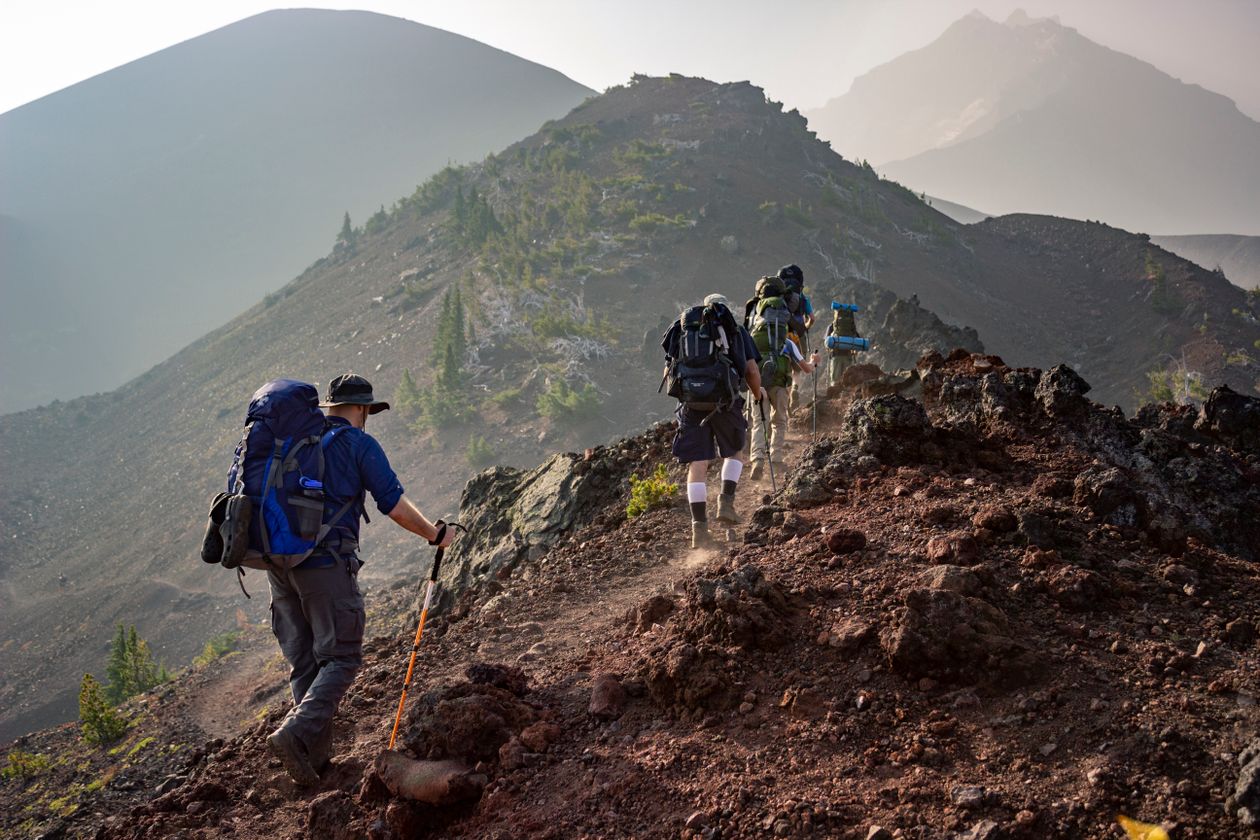
Pack size matters more than most guides admit. Too small and you can’t carry what you need. Too big and you fill it — and spend the day carrying the weight. Here’s the breakdown by use case.
Day Hike (20–40L)

3,294 reviews | 4.5 stars
Best for: Full day hikes and light overnight trips. 40 liters is the sweet spot for a man who wants room for layers, food, water, and camera gear without committing to a frame pack. Waterproof with a rain cover included. Chest and waist straps transfer load properly.
The catch: 40L without a frame can feel floppy when fully loaded on technical terrain. Use the sternum strap and load heavier items close to your back.
See it on AmazonOne to Two Nights (38L)

484 reviews | 4.6 stars
Best for: One to two night trips where you’re carrying a shelter, sleeping bag, and cooking setup. Osprey’s build quality is a step above most packs at this price — the suspension system actually fits, the hip belt transfers load to your hips instead of just decorating your waist, and it’ll outlast several cheaper alternatives.
The catch: 38L is tight for two nights with cold-weather gear. If you’re going somewhere cold or extended, size up to the Kestrel 48.
See it on AmazonMulti-Day or Group Carry (75L)

Amazon Basics 75L Internal Frame Backpack
10,402 reviews | 4.5 stars
Best for: Extended trips, group camping where you’re splitting gear, or anyone who tends to overpack and needs the room. 10,402 reviews at 4.5 stars is exceptional for a large pack. Internal frame keeps the load stable. Rain cover included. At this price it’s a serious value for the capacity.
The catch: 75L empty weighs more than an ultralight pack, and the capacity makes it easy to over-pack. Be disciplined about what goes in or you’ll spend the trip regretting the weight.
See it on AmazonLevel 4: The Camp and Comfort Layer
The difference between “we hiked to the summit and turned around” and “we found a spot and actually sat there for an hour.” These items don’t affect performance on trail — they determine how much you enjoy the time you spend off it.
Ultralight Camp Chair

Naturehike YL08 Ultralight Camp Chair
1,034 reviews | 4.4 stars
Why it changes the experience: 2.38 lbs, folds to a bag small enough to strap to the outside of a pack, and actually holds a person comfortably on uneven ground — the anti-sinking feet are the detail that separates this from chairs that disappear into soft terrain. Take a lunch break at a lake and actually sit instead of perching on a rock.
The catch: Ultralight chairs have a lower weight limit than full-size camp chairs. Check the rating before you buy if you’re a larger guy.
See it on AmazonPower Banks
A dead phone on trail is a navigation problem. A dead phone on a multi-day trip is a safety problem. Power banks are light and the return on weight is high.

ELECOM NESTOUT Rugged Power Bank — 15,000mAh
1,676 reviews | 4.5 stars
Best for: Multi-day trips where you need guaranteed power. 15,000mAh charges a modern phone about 3–4 times. Rugged build rated for outdoor use — drop-resistant and built to handle the conditions that destroy standard chargers. The right pick when phone battery is a serious concern.
The catch: Rugged build means more weight than a slim power bank. If you’re counting ounces, the solar option below is lighter but slower.
See it on Amazon
BLAVOR Solar Power Bank — 10,000mAh
46,064 reviews | 4.3 stars
Also great: Clip it to the outside of your pack while hiking and it trickle-charges from sunlight. Wireless charging, dual flashlight, and 46,064 reviews puts it in a different tier of confidence. The solar panel won’t fully charge it from empty — it’s a supplement, not a replacement for wall charging before a trip. But as a trail-top-up it works well.
The catch: Solar charging is slow — a few hours of direct sunlight adds maybe 20% charge. Don’t rely on it as your primary power source.
See it on AmazonLevel 5: The Backcountry Layer (When You’re Serious)
Once you’re going off-trail, into the backcountry, or anywhere cell signal isn’t reliable, the stakes change. These items exist for that tier — not for a day hike at a national park, but for the trips where you’re genuinely on your own.
Satellite Communicator
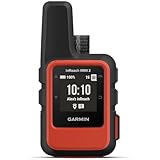
2,091 reviews | 4.6 stars
Why it matters: Two-way satellite messaging from anywhere on earth — no cell signal required. Text your group, share your GPS location, check weather forecasts, and trigger an SOS that connects to a staffed rescue coordination center 24/7. The item that turns a medical emergency on a remote trail from a potential fatality into a helicopter rescue. Requires a satellite subscription (starts around $15/month).
The catch: The device cost plus subscription makes this a real investment. If you’re doing backcountry regularly, it’s non-negotiable. For casual national park day hikes, it’s overkill.
See it on AmazonGPS Handhelds
Phone GPS drains battery fast and relies on downloaded maps. A dedicated GPS handheld has a week of battery life, topographic maps built in, and works in conditions that kill phones. Two options depending on what you need.

396 reviews | 4.5 stars
Best for: Navigation-focused backcountry hiking where satellite messaging isn’t the priority. Multi-band GPS with topographic maps, 16-hour battery, preloaded with 250,000+ km of trails. The dedicated navigation tool that works when phones don’t.
The catch: Navigation only — no satellite messaging. If you want both, look at the 67i below.
See it on Amazon
349 reviews | 4.4 stars
Best for: Serious backcountry where you want navigation and satellite communication in one device. The 67i combines the GPSMAP navigation system with inReach satellite messaging — two-way texting, weather, and SOS, all in one unit. More expensive, but consolidates two devices into one.
The catch: Premium price point — this is serious backcountry gear. Requires an inReach satellite subscription on top of the device cost.
See it on AmazonWalkie Talkies (Group Hiking)
MaxTalker Walkie Talkies — 2 Pack
1,392 reviews | 4.4 stars
Best for: Group hikes where the party splits up, parents hiking with kids, or any situation where staying in contact matters but satellite messaging is overkill. USB-C rechargeable, NOAA weather alerts, LED flashlight built in. Range depends on terrain — line of sight is the governing factor, not the stated maximum.
The catch: Walkie talkie range specs are always measured in ideal open conditions. Expect significantly less in canyons or dense forest.
See it on AmazonWhat to Skip
Cotton anything. Cotton absorbs sweat, stays wet, and chills you the moment you stop moving. Every layer you wear on a real hike should be merino wool, synthetic, or a technical blend. Leave the cotton t-shirts for around camp.
A heavy DSLR or mirrorless on a day hike. A full camera kit weighs 3–5 lbs before you’ve packed anything else. For trail photography, a phone with a solid tripod setup delivers better shots than a heavy camera you’re too tired to hold steady. Our phone tripod guide covers the lightweight setups that actually work on trail.
A rain layer left in the car. The only gear that doesn’t work is the gear you didn’t bring. Pack the poncho or jacket before you leave the trailhead.
A pack that’s too big for the trip. Men who buy a 75L pack for day hikes fill it. That’s 30 lbs of unnecessary weight on your back by mile three. Match pack size to trip length, not to how much gear you own.
Heading somewhere specific? Our Rocky Mountain National Park guide and Zion National Park guide cover exactly what to bring for each park. And if you’re hiking as a couple, our hiking date ideas guide has tips on making the whole thing look as good as it felt.
SHOP EVERYTHING
The Full Men’s Hiking Gear List on Our Amazon Storefront
Every pick in this guide in one place. Updated when we find better options.
Browse Our Hiking Gear List →Frequently Asked Questions
How much should a day hiking pack weigh?
Target 10–15% of your body weight as a rough ceiling for a loaded day pack. For most men that’s 15–25 lbs with water. If your pack is heavier, cut food first, then anything you’re carrying “just in case” that isn’t a rain layer or first aid kit.
Are trekking poles worth it for day hikes?
Yes, especially on trails with significant elevation gain or descent. The knee protection on the way down is the main argument — most men who try poles at altitude or on long descents don’t hike without them after that. At under $40, the Cascade Mountain Tech poles have no real counter-argument.
What’s the difference between a water filter and a water purifier?
Filters remove bacteria and parasites but not viruses. Purifiers (chemical tablets or UV purifiers) also handle viruses. For most North American backcountry hiking, a filter is sufficient — viruses are rare in wilderness water sources here. International travel or areas with heavy human impact are where purification becomes more important.
Do I need a Garmin inReach for national park day hikes?
No. National parks have rangers, established trails, and search and rescue services. The inReach is for backcountry travel — off-trail, remote wilderness, anywhere you’re genuinely away from help. For a day hike on a well-traveled trail, a charged phone with downloaded offline maps is sufficient.
What’s the one item most men forget on their first serious hike?
A rain layer. Every experienced hiker carries one. First-timers leave it behind because it looks clear in the morning. At elevation, afternoon weather doesn’t ask permission.
ALL PICKS FROM THIS GUIDE


