
Zion National Park Hiking: Everything You Need to Know Before You Go
Disclosure: This post may contain affiliate links. I may earn a small commission if you click a link or make a purchase, at no additional cost to you. See my disclosure for more info.
You booked the trip. You found a place to stay. You drove to Springdale, walked to the shuttle, waited in line, got off at the right stop — and then stood at the mouth of The Narrows in trail runners while everyone around you waded into a river. Nobody warned you. That’s the Zion experience for about half of first-time visitors. The park is stunning, the logistics are a legitimate headache, and a few things will ruin your day if you don’t know about them before you arrive. We’ve been to Zion. Here’s what we wish someone had told us.
GEAR YOU ACTUALLY NEED FOR ZION
The Narrows: Neoprene Socks
The single most important thing you’re not packing
OUR HIKING GEAR PICKS
Everything We Use on the Trail, on Our Amazon Storefront
Boots, packs, poles, hydration — curated from what we actually bring.
As an Amazon Associate we earn from qualifying purchases. This doesn’t change our picks or what we recommend.
Why You Should Trust This
We visited Zion in April 2025, which turned out to be one of the better times to go — crowds are lighter than summer, temperatures are manageable, and the permit situation for Angels Landing is annoying but not impossible. We hiked The Narrows without the right footwear and paid for it. We figured out the shuttle, the parking situation, and which trails require permits the hard way. Everything in this guide comes from that trip, not from reading other people’s guides.
Before You Go: The Logistics Most Articles Skip
Zion is one of the most visited national parks in the country — nearly 5 million people in 2024. The park has adapted to that with a shuttle system, a permit lottery for its most famous trail, and enough unwritten rules that showing up cold is a recipe for a frustrating day. Get these figured out before you leave home.
Park Entrance and the America the Beautiful Pass
A 7-day vehicle pass costs $35. If you’re doing more than one national park on a trip — and if you’re going to Zion, you probably are, since Bryce Canyon is 90 minutes away — the America the Beautiful Annual Pass ($80) pays for itself fast. It covers Zion, Bryce, Capitol Reef, and every other federal recreation site. Worth doing the math before you pay at the gate.
The Shuttle System (and Why You Need to Arrive Early)
Private vehicles can’t drive up Zion Canyon Road during peak season — you take the free shuttle from the Visitor Center. The shuttle runs frequently, but the Visitor Center parking lot fills by 8am in summer and by 9am in shoulder season. If you arrive after that, you’re parking in Springdale and taking the town shuttle in. That’s fine — Springdale is walkable and the town shuttles connect — but it adds time. Aim to be at the Visitor Center by 7:30am if you want a direct spot. If you’re staying in Springdale, the town shuttle is actually more convenient than driving anyway.
Where to Stay: Springdale vs. Kanab vs. St. George
This is the question nobody answers directly, so here’s the honest breakdown.
Springdale is the town right outside the south entrance — literally one stoplight from the park gate. Staying here means you walk or shuttle into the park, skip the parking battle entirely, and are in hiking distance of a solid selection of restaurants. It’s also the most expensive option and books out fast, especially weekends from April through October. If your budget allows it and you’re doing two or more days in the park, Springdale is the right call.
Kanab is about 40 minutes east on US-89. It’s significantly cheaper, has more lodging options, and puts you in easy driving distance of both Zion and the east side of Bryce Canyon. The catch is that 40-minute drive each way eats into your hiking day, and you’ll still need to deal with parking at the Visitor Center. If you’re doing a multi-park trip through southern Utah, Kanab makes a lot of sense as a central base.
St. George is about 45 minutes southwest on I-15. Larger city, more hotel and chain options at lower prices, airport if you’re flying in. The drive to Zion is straightforward. If you’re on a tight budget or traveling with a group that needs multiple rooms, St. George is a solid choice. It also has Snow Canyon State Park nearby if you want an easy warm-up hike before hitting Zion.
Our take: Springdale if you can get a room at a reasonable rate, Kanab if you’re doing a southern Utah loop, St. George if budget is the priority.
The Angels Landing Permit: What You Actually Need to Know
Angels Landing is Zion’s most famous hike and the one most people picture when they think of the park — the chains-assisted ridgeline, the 1,400-foot drop to the canyon floor on both sides. It requires a permit to hike beyond Scout Lookout, and getting that permit is annoying enough to plan your whole trip around.
There are two chances to get a permit. The first is the seasonal lottery, which runs about 6-8 weeks before your intended hiking date — you apply on Recreation.gov, pay a $6 non-refundable application fee, and find out in a few days whether you won. The second chance is the day-before lottery: apply between 12:01am and 3pm Mountain Time the day before your hike, results come at 4pm. If you win, the fee is $3 per person. Success rates on the day-before lottery are reasonable on weekdays, much harder on weekends.
The honest advice: if Angels Landing is the main reason you’re going to Zion, enter the seasonal lottery as early as you can and plan your trip dates around the result. If you’re flexible and weekday-available, the day-before lottery is actually a decent option. If you show up on a Saturday in July expecting to just hike it, you will not be hiking it.
The Trails: What to Hike and What to Know Before You Start
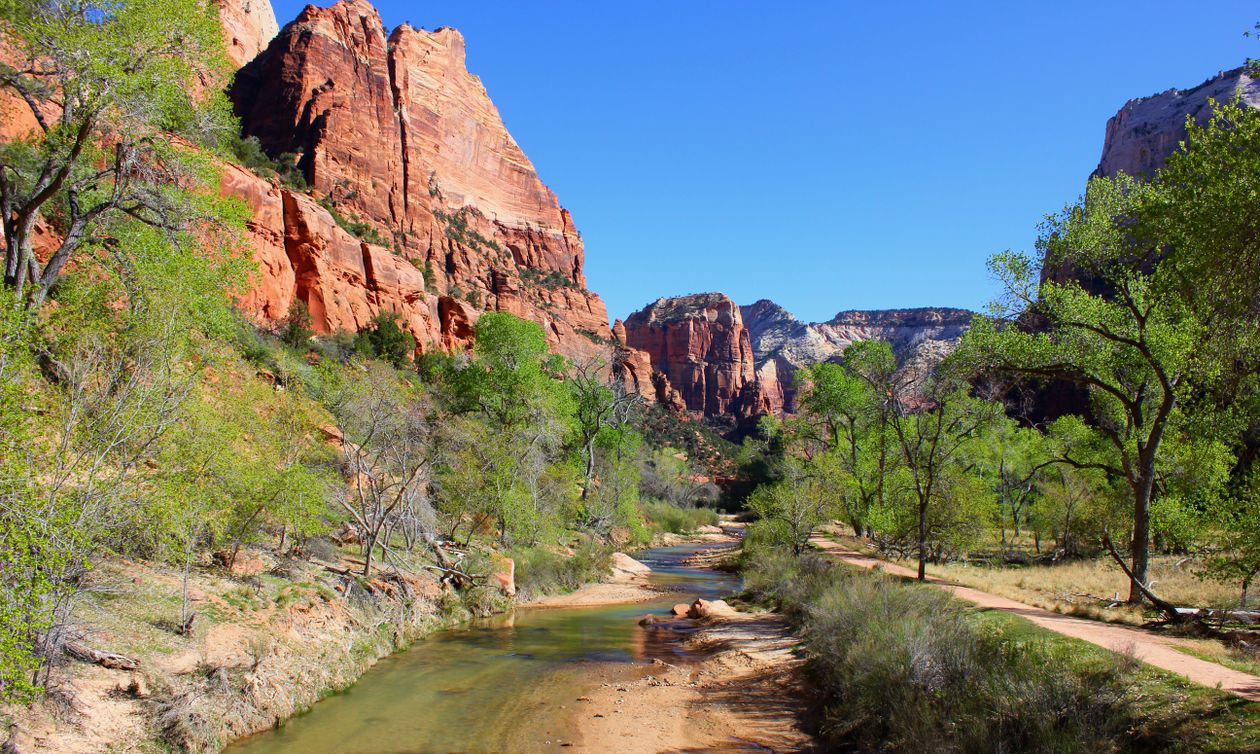
The Narrows (Easy to Moderate — 3.6 miles RT from Temple of Sinawava)
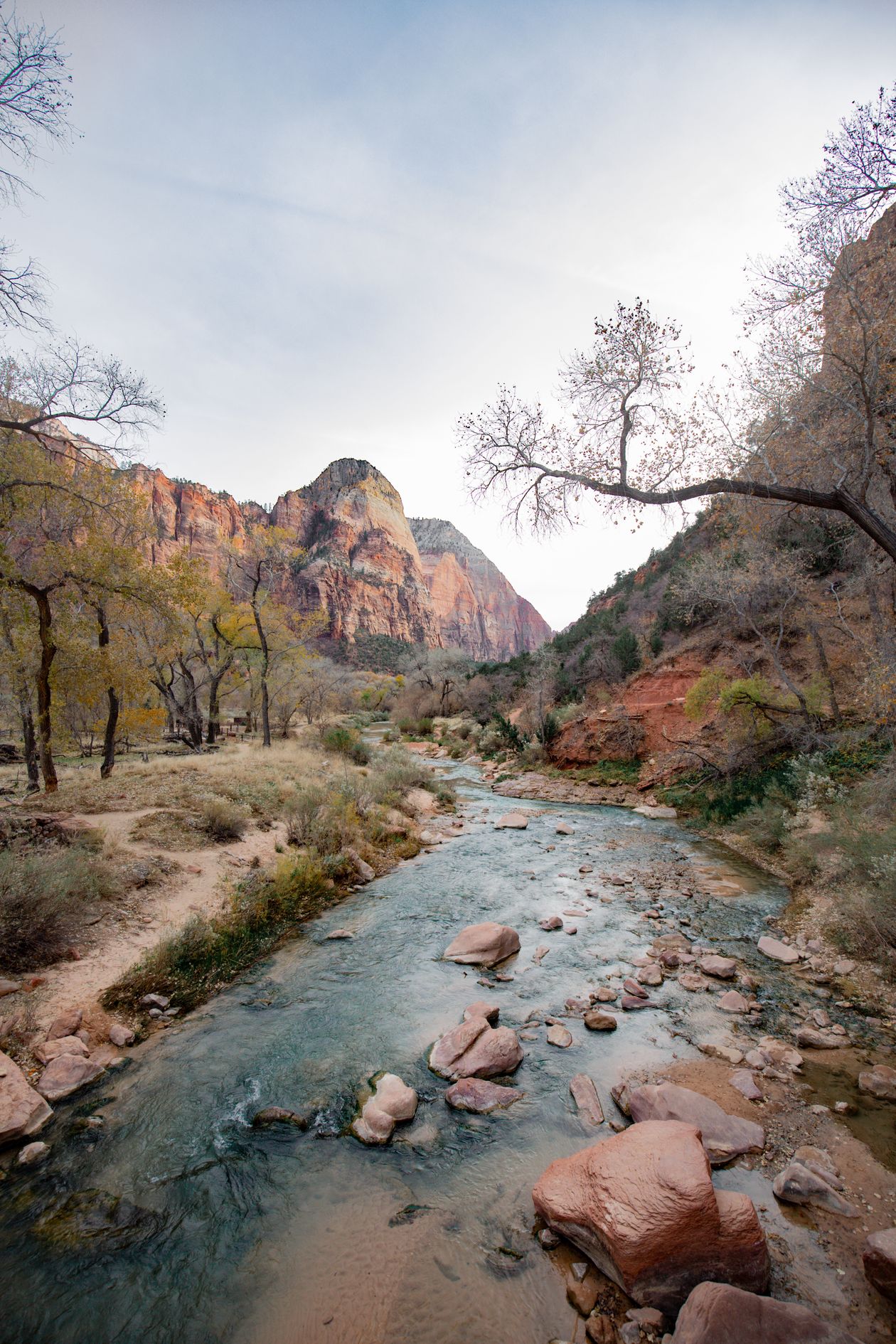
The Narrows is where you walk upstream through the Virgin River inside a slot canyon with walls that rise hundreds of feet on both sides. It’s one of the most visually spectacular hikes in any national park, and it requires gear that almost nobody brings the first time.
The day hike version is a bottom-up trip starting at the Temple of Sinawava (last shuttle stop). No permit required. You walk a paved Riverside Walk for a mile, then enter the river and wade upstream toward Big Springs — 1.8 miles into the slot canyon. You turn around whenever you’re done. The canyon narrows progressively as you go, the walls get higher, and the light gets more dramatic. It’s exceptional.
Here’s the part that surprises everyone: you’re wading in a river. Not stepping over a few puddles — wading through knee-deep (sometimes thigh-deep) moving water across slippery river rocks for the better part of two hours each way. Trail runners in that environment mean cold, soaked feet within five minutes. We did it in April in trail runners and it was genuinely unpleasant for the first hour until our feet went numb.
What to Wear for The Narrows
Two options. The right answer depends on the season.
Option 1 (summer, water above 65°F): Water shoes + neoprene socks. A pair of grippy water shoes over thick neoprene socks gives you traction on wet river rock and keeps your feet warm enough in moving water. This is the budget-friendly approach and works well June through September when water temps are manageable. The socks make the difference — bare feet in water shoes slip on algae-covered rocks and go numb fast.
Neoprene Socks for The Narrows
The one item that separates comfortable from miserable in The Narrows
Why they work: Neoprene traps a thin layer of water against your skin that your body heats up, keeping feet warm in cold river water for hours. Thick neoprene (3-5mm) is the call for spring and fall when water is cold. In summer you can get away with 2mm.
The catch: They add bulk — size up one half-size in your water shoes to accommodate them. And they take a while to dry, so pack a spare pair of regular socks for the drive home.
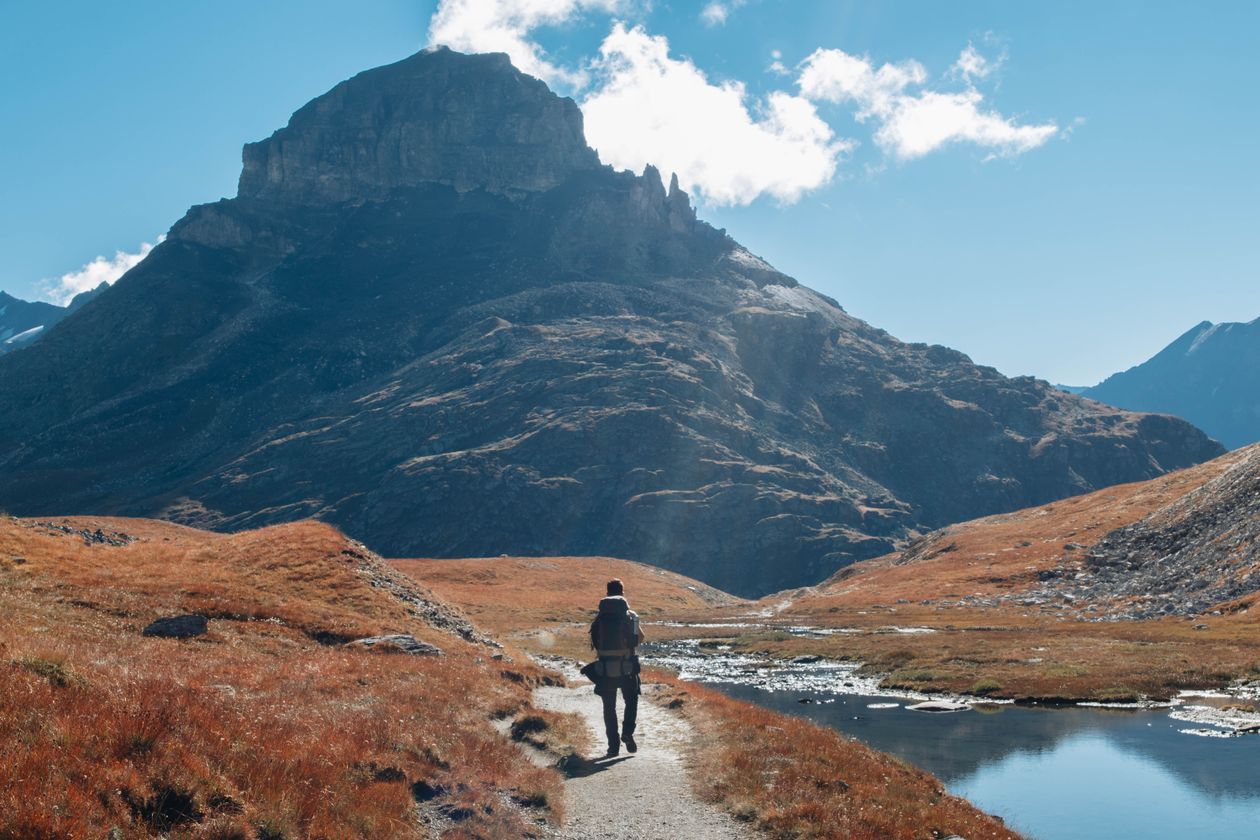
Option 2 (spring, fall, cold water): Rent canyoneering boots in Springdale. Multiple outfitters in Springdale rent full Narrows setups — neoprene pants, canyoneering boots with sticky rubber soles, and a walking stick. This is the comfortable option when water is genuinely cold (April, May, October, November). The sticky rubber soles on rental canyoneering boots grip river rock dramatically better than any consumer shoe. It costs around $30-45 for the day and is worth it if you’re visiting in shoulder season. We did April in regular trail runners and would absolutely rent next time.
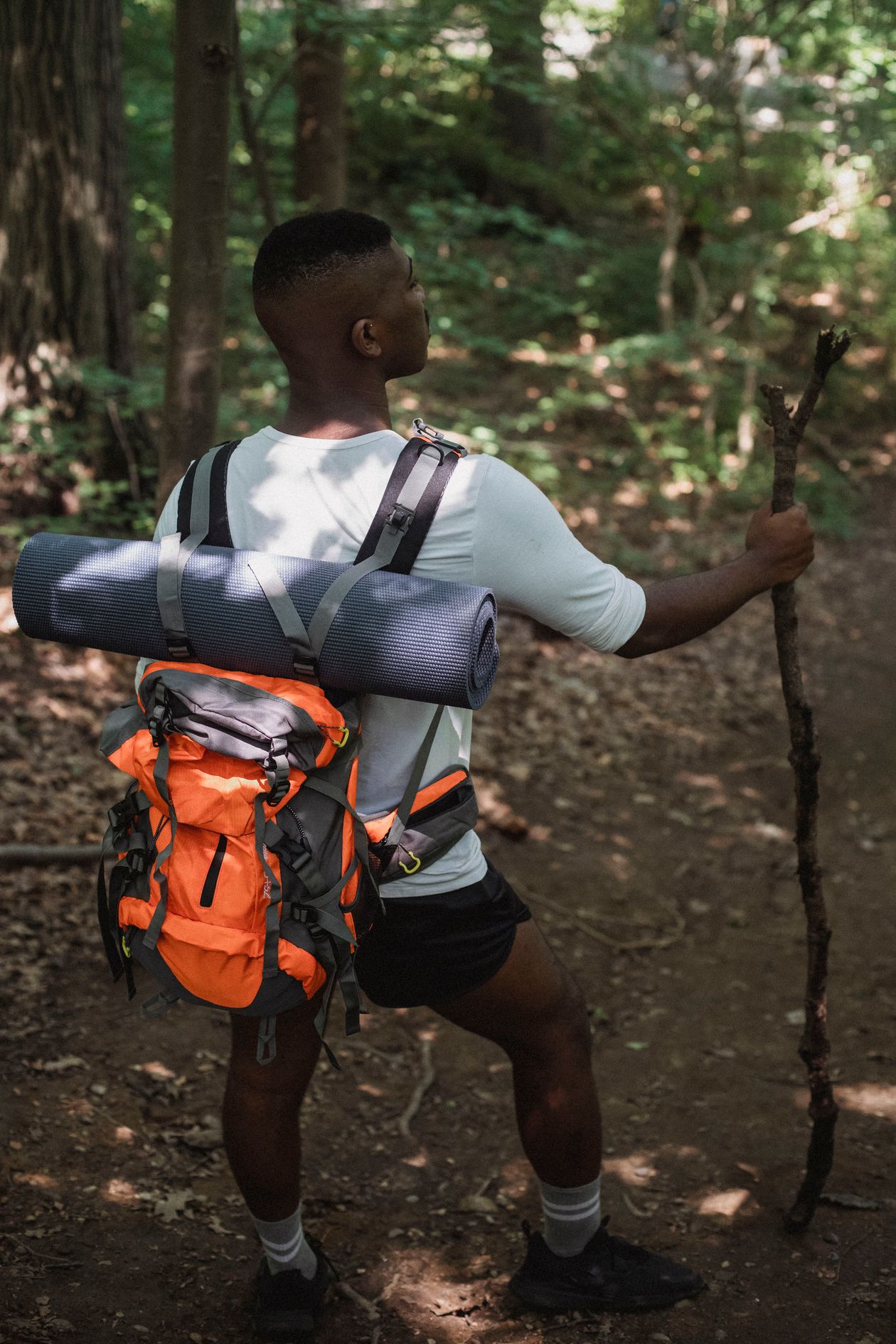
Collapsible Trekking Poles
Third point of contact on moving water and slippery rock — not optional for The Narrows
Why they matter: Moving water throws off your balance even when it’s shallow. A trekking pole gives you a third point of contact on river rock and a way to test depth before stepping. The rental outfitters in Springdale supply wooden walking sticks with the gear package — if you already own collapsible poles, bring them. They collapse small enough to pack in a daypack for the Riverside Walk portion.
The catch: Collapsible poles can twist loose if not locked properly. Tighten them one click past where you think they’re set before entering the water.
Waterproof Phone Pouch
You’re in a river for two hours. Water resistance ratings are not the same as waterproof.
Why it matters: Modern iPhones have an IP68 water resistance rating that covers submersion in controlled conditions — not continuous exposure to moving water and river sediment for two hours. A waterproof float pouch around your neck keeps your phone dry and lets you shoot through the pouch in an emergency. The best pics in The Narrows come from people who aren’t stressed about their phone.
The catch: Photo quality through a pouch is noticeably reduced — it’s a protection tool, not a photography tool. For serious shots, find a dry perch and take the phone out briefly.
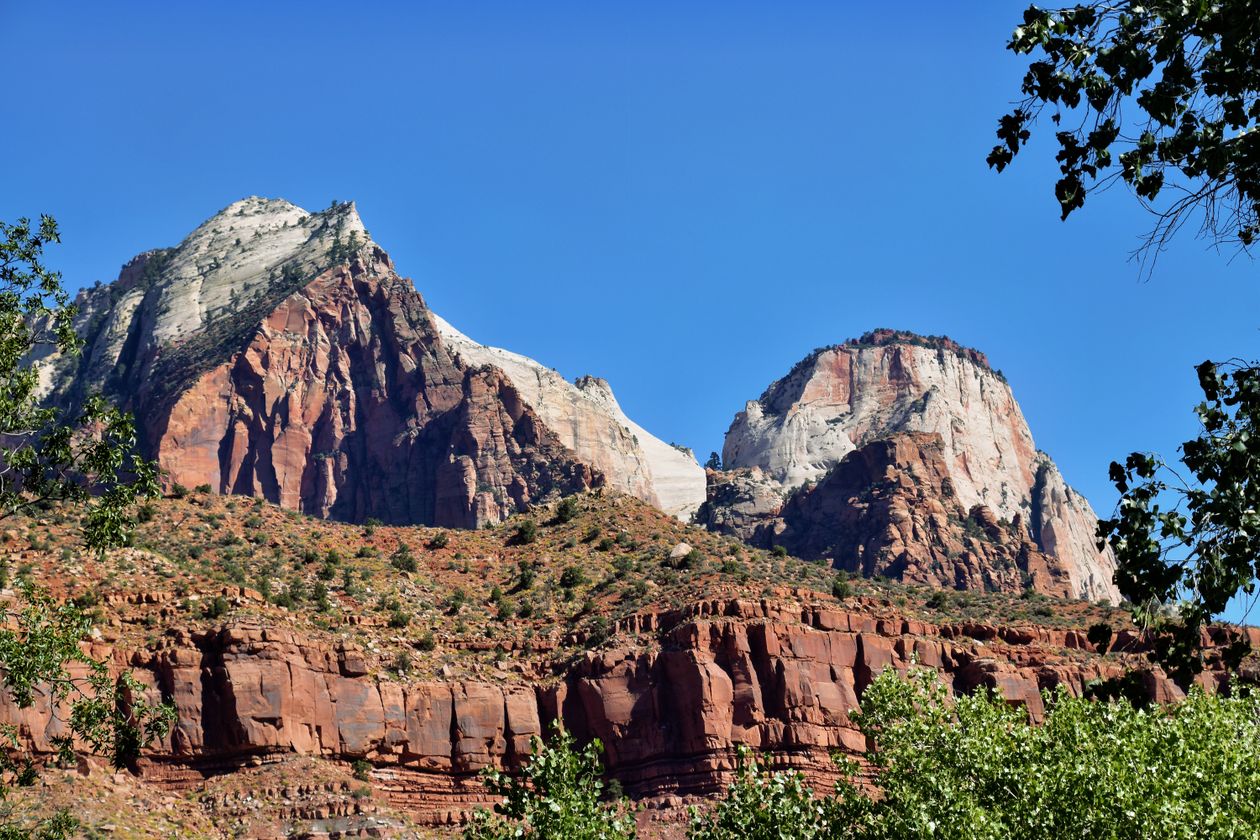
Angels Landing (Strenuous — 5.4 miles RT, permit required above Scout Lookout)
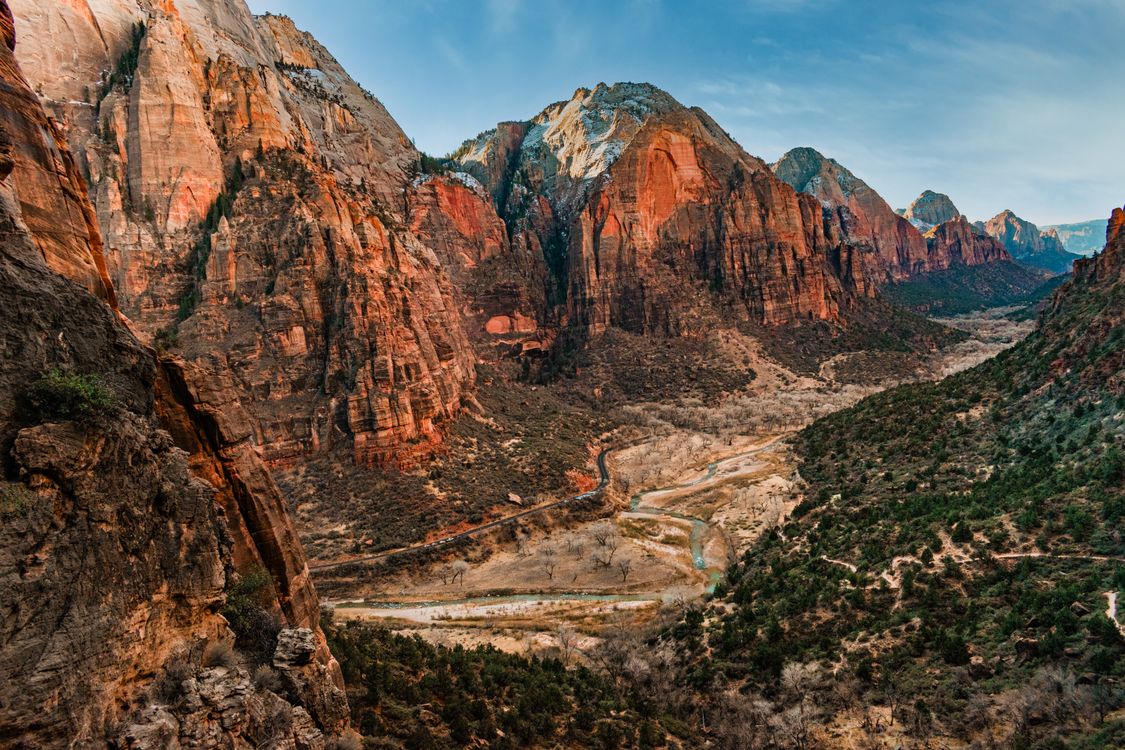
Angels Landing is the hike that every Zion photo is taken from. The summit sits 1,488 feet above the canyon floor on a narrow sandstone fin, and the last half-mile to the top involves chains bolted into the rock because the trail is too exposed to climb without them. It’s the most thrilling day hike in the American Southwest and genuinely not suitable for people with a fear of heights.
The hike itself starts at the Grotto shuttle stop. You climb through a series of switchbacks called Walter’s Wiggles — 21 tight switchbacks carved into the cliff face — up to Scout Lookout, where the permit check happens. From Scout Lookout the chains section begins. The views at the top are unobstructed in every direction: Zion Canyon below, the river threading through it, red walls as far as you can see. It earns the permit hassle.
Gear note: hiking boots with real ankle support matter here. The chains section involves scrambling on slickrock and pulling yourself up steep grades — trail runners work but grippy boot soles are more confidence-inspiring. Bring more water than you think you need. The exposed ridgeline above Scout Lookout has no shade.
Canyon Overlook Trail (Easy — 1 mile RT, no permit)
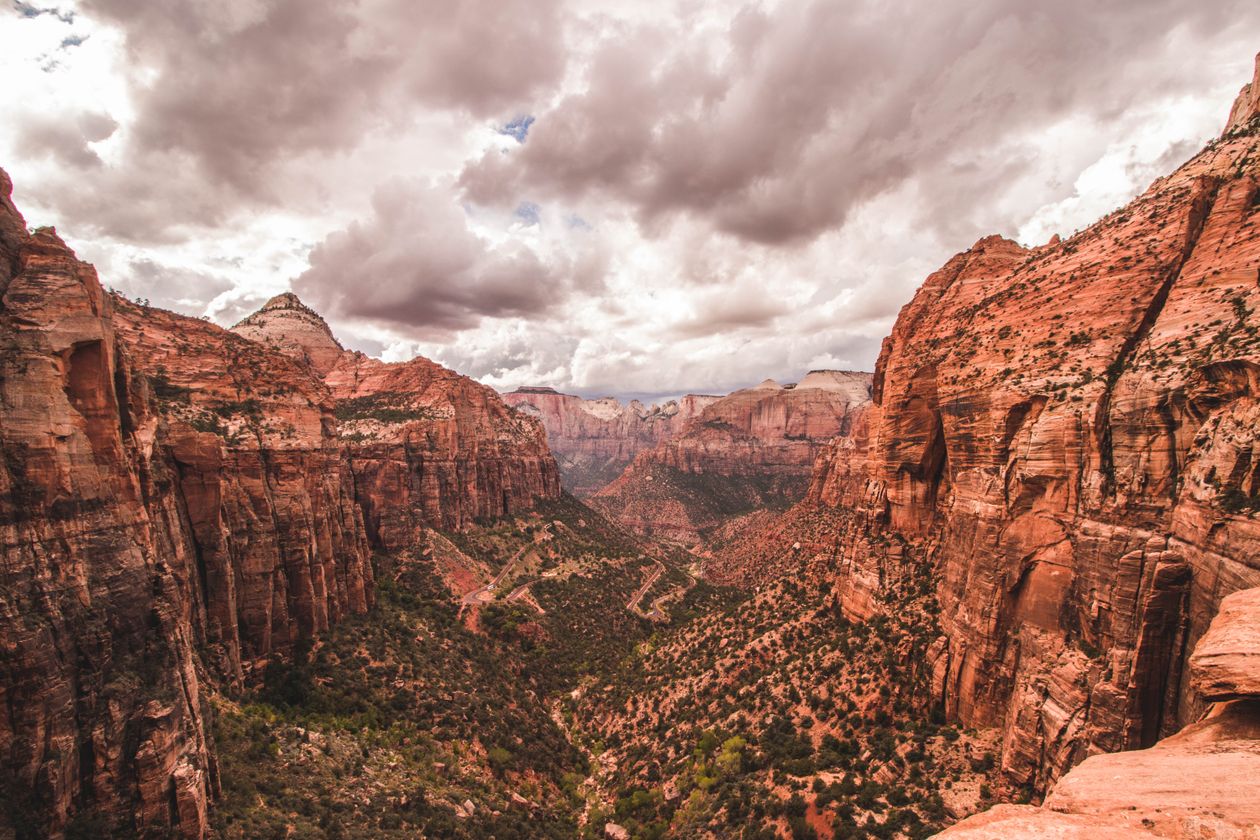
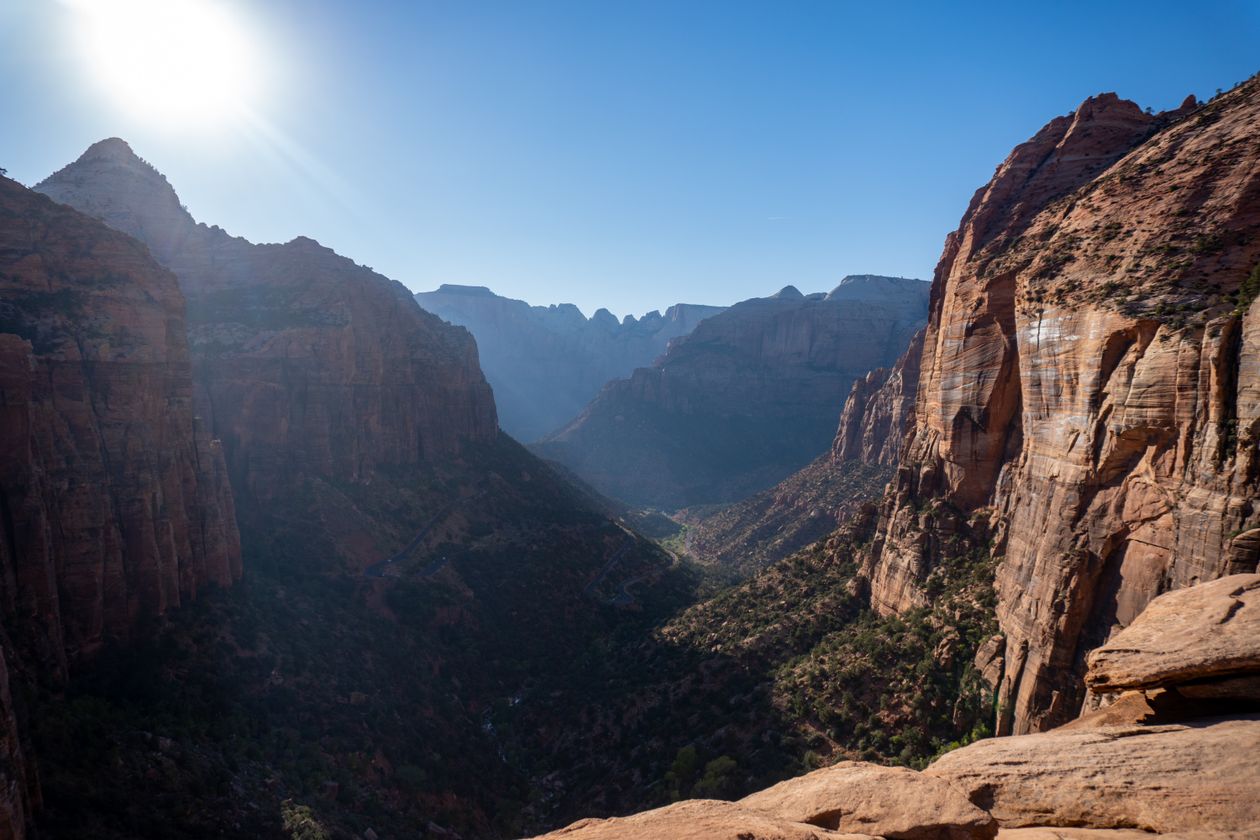
The most underrated hike at Zion. One mile round trip, minimal elevation gain, ends at a panoramic overlook of Zion Canyon from the east rim — you’re looking directly at the valley with the canyon walls framing it. No permit, no shuttle required (parking is at the east entrance of the Zion-Mt. Carmel Tunnel), and significantly less crowded than anything in the main canyon. If you only have a few hours or want a quick win on your way in or out of the park, this is it.
Emerald Pools (Easy to Moderate — 1.2 to 3 miles RT)
A series of three pools and waterfalls accessible from the Zion Lodge shuttle stop. Lower Emerald Pool is the easy version — a 1.2-mile round trip to a pool fed by a dripping waterfall overhead, walkable for most fitness levels. Middle and Upper Emerald Pools add distance and elevation and get progressively quieter as most visitors turn back at the lower pool. No permit, no complicated logistics. Good option for early morning or late afternoon when Angels Landing is either lottery-gated or packed.
Kolob Canyons: The Part of Zion Nobody Talks About
Kolob Canyons is a separate section of Zion National Park with its own entrance off I-15, about 40 minutes northwest of Springdale. It sees a fraction of the main canyon’s traffic. The drive into Kolob Canyons Road is itself worth the detour — 5 miles of paved road winding through narrowing red canyons with pullouts at every major viewpoint. The Taylor Creek Middle Fork Trail (5.4 miles RT) is a legitimate hike through cottonwood-lined canyon with zero permit hassle. If you have two or more days at Zion, do Kolob Canyons on day two. Covered under the same entrance fee or America the Beautiful Pass.
SHOP HIKING GEAR
Our Full Gear List, Curated on Amazon
Boots, packs, neoprene socks, trekking poles, water filters — everything we actually use.
What NOT to Do at Zion
Don’t show up for Angels Landing without a permit. You can hike to Scout Lookout — the Walter’s Wiggles section is permit-free and already a solid hike with good views. But the chains section above Scout Lookout requires a permit and rangers check. You cannot talk your way through.
Don’t hike The Narrows in trail runners in spring or fall. You’ll be in cold moving water. Wet trail runners = numb feet within minutes and an unpleasant two hours. Either rent canyoneering boots in Springdale or pack neoprene socks and water shoes. Don’t learn this the way we did.
Don’t arrive at the Visitor Center after 9am in peak season expecting to park. Plan to arrive before 7:30am, or stay in Springdale and walk to the town shuttle.
Don’t hike The Narrows if there’s flash flood risk. The NPS posts daily river condition updates at the Visitor Center and online. The canyon has no escape routes once you’re inside — a flash flood can come from upstream in blue skies. Check conditions every morning before you go in.
Don’t skip Kolob Canyons because it’s not in Springdale. The 40-minute drive is worth it. It’s the part of the park that actually feels like you have the canyon to yourself.
If you’re planning the pic side of a Zion trip, our hiking date ideas guide covers how to set up shots on trail that actually turn out. And if you’re thinking about what to bring for photography, our phone tripod guide is worth a read before you pack.
Frequently Asked Questions
When is the best time to visit Zion?
October is the consensus answer, and it’s correct. Crowds drop significantly after Labor Day, temperatures are cooler for hiking, and the permit odds for Angels Landing improve on weekdays. April and May work well too — wildflowers in the canyon, manageable temps — but spring means cold water in The Narrows, so plan accordingly. July and August are the busiest months, peak permit competition, and afternoon heat on exposed trails is real. If you’re going in summer, start hiking by 7am.
Do I need the Angels Landing permit just to see the chains?
Yes. The permit is required to hike past Scout Lookout, which is where the chains begin. You can hike to Scout Lookout without a permit — it’s a legitimate viewpoint with great canyon views — but you can’t continue to the summit without winning the lottery. Rangers check at Scout Lookout.
Can I hike The Narrows without getting wet?
No. The Riverside Walk paved section stays dry, but The Narrows itself is the river — you’re wading in it for the full duration. The depth varies from ankle to thigh depending on the season and water levels. Spring and early summer tend to run deeper. There’s no trail on the bank; the river is the trail.
Is Zion good for photos?
Exceptionally. The canyon walls catch morning light in a way that makes almost any shot look intentional. The Narrows at golden hour — if you’re still in there — is one of the more surreal environments you’ll photograph. Canyon Overlook at sunrise is worth the early alarm. The challenge is the crowds — anywhere a shuttle stops fills up fast, so shots without strangers in the background require either being early or pointing up at the walls instead of along the trail.
Are dogs allowed in Zion?
Dogs are allowed in the park but not on most trails, including all the main canyon trails covered in this guide. They’re allowed on the Pa’rus Trail (a paved riverside path near the Visitor Center) and in developed campground areas. If you’re bringing a dog, the Pa’rus Trail is their option — it’s scenic and legitimately enjoyable, just not the canyon experience you came for.
How many days do you need at Zion?
Two full days covers the main canyon well: day one for The Narrows and Emerald Pools, day two for Angels Landing (permit-dependent) and Canyon Overlook. A third day lets you do Kolob Canyons without rushing. One day is enough to see the park but you’ll be choosing between The Narrows and Angels Landing, not doing both.
BEFORE YOU PACK
The Hiking Gear We Actually Bring — All on Our Amazon Storefront
Neoprene socks, trekking poles, waterproof pouches, boots, packs, and more. We update this list after every trip.