
Best Compression Socks for Women: Hiking, Travel, and Recovery
Disclosure: This post may contain affiliate links. I may earn a small commission if you click a link or make a purchase, at no additional cost to you. See my disclosure for more info.
Leg fatigue at mile six isn’t a fitness problem. It’s a circulation problem. Your calves stiffen, your ankles feel heavy, and the last two miles of any real hike turn into a grind. Compression socks fix most of it, and they’ve gotten good enough that you might actually want them in your trail pics. The Physix Gear Compression Socks are the pick: 94,471 verified Amazon reviews at 4.5 stars, 20-30 mmHg graduated compression, under $20. The Sockwell Women’s Pulse is the runner-up if you want a merino wool option that runs cooler in heat.
OUR PICK
Physix Gear Compression Socks
94,471 reviews at 4.5 stars. 20–30 mmHg graduated compression. The most-trusted option in this category at this price.
ALSO GREAT
Sockwell Women’s Pulse Compression Socks
Merino wool blend. Runs cooler in heat. The pick if you want a step up in fabric quality and temperature regulation.
Why You Should Trust This
Physix Gear has 94,471 verified Amazon reviews at 4.5 stars. That’s one of the largest review counts in the entire compression sock category — real buyers across different hike types, body types, and climates confirming what the product claims. Sockwell cleared the same threshold: 4+ stars, 1,000+ verified reviews, active sales rank. CPC data for compression sock keywords runs $2–5 per click, meaning advertisers know buyers are in the market. Both products are what real people buy and reorder.
What Compression Actually Does on Trail
Compression socks apply graduated pressure — tighter at the ankle, progressively looser toward the knee. That gradient helps blood and fluid move back toward the heart instead of pooling in your lower legs. On a hike, three things happen.
Reduced muscle vibration on descents. Every downhill step sends a small impact wave up your calf. Over 2,000 feet of descent, that vibration accumulates into the soreness that wrecks your next morning. Compression dampens that wave.
Less ankle swelling on long miles. Fluid naturally pools in feet and ankles during long walking days. Compression keeps circulation moving and keeps swelling manageable, especially on hot days.
Faster recovery. The same mechanism that reduces in-hike fatigue also speeds up post-hike recovery. Same-day or next-day legs feel meaningfully different with compression versus without.
When to put them on. At the trailhead, not at mile four. The benefit builds over miles. Putting them on mid-hike helps, but you get the full effect when they go on fresh.
Compression level for hiking. 15–20 mmHg is the light athletic range. 20–30 mmHg — what both picks use — is the standard for real athletic performance. For day hiking with significant vertical, 20–30 is the right call.
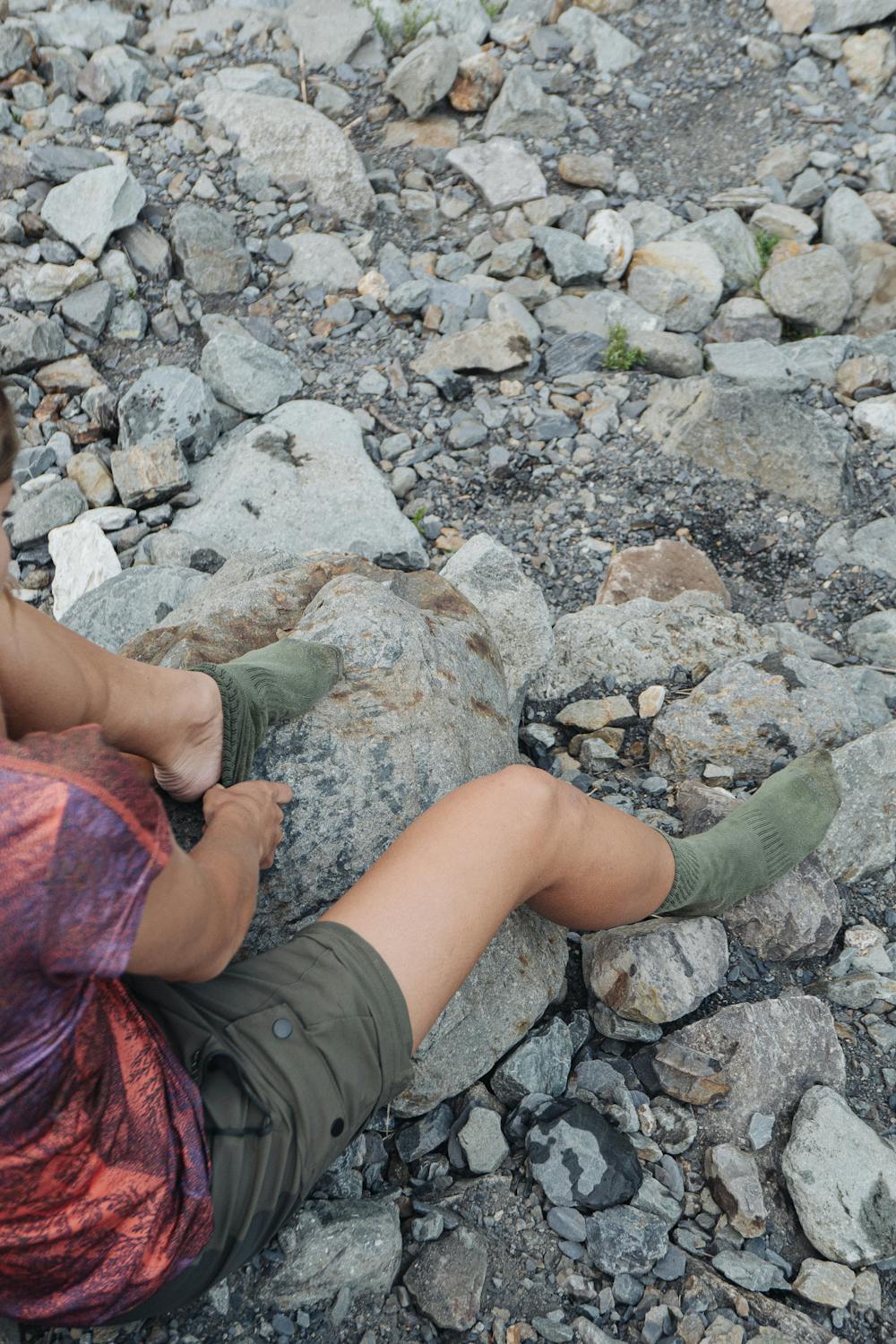
Why they photograph better now. Modern compression socks come in muted earth tones, subtle stripes, and clean neutral colorways that pair with trail runners and hiking boots without looking clinical. An olive or slate compression sock with hiking boots is a real aesthetic. The compression profile at the calf adds visual definition that thin liner socks don’t give you.
Physix Gear Compression Socks
Why we picked it
94,471 verified reviews at 4.5 stars. That number represents real hikers, nurses, travelers, and athletes across years of consistent use confirming that these socks do what they claim. The 20–30 mmHg graduated compression is real and holds through a full long day, not just the first hour. Available in a wide range of colorways including muted neutrals and earth tones that work on trail. Under $20 for a pair, which makes buying multiple colors practical. Most people who try these once don’t go back to regular socks on long hikes.
The catch
Sizing runs firm. If your calf measurement puts you right between sizes, go up. A compression sock that’s too tight is worse than none at all — you’ll know within the first mile if you got the wrong size.
Sockwell Women’s Pulse Compression Socks
Why we picked it
1,851 reviews at 4.7 stars. Sockwell uses a merino wool blend that regulates temperature better than nylon-spandex constructions — cooler in heat, warmer in cold. That matters on longer hikes where temperature swings during the day. The compression is firm and graduated at 15–20 mmHg, which is slightly lighter than Physix Gear. If you run hot, hike in summer heat, or want a sock that doubles as a cooler-weather base, Sockwell earns the step up in price.
The catch
Merino requires more careful washing than synthetic. Machine wash cold, lay flat to dry. If you throw it in the dryer on high like a regular sock, you’ll shrink the compression profile and the fit changes. Follow the care instructions.
Frequently Asked Questions
Do compression socks actually help hiking?
Yes, specifically on long descents, hot days, and multi-day trips. The reduction in muscle vibration and ankle swelling is felt. On a 3-mile flat walk you might not notice. On a 10-mile day with 2,000 feet of descent, your next-morning legs will know the difference. People who use them once on a hard hike almost always keep using them.
What compression level should I use for hiking?
20–30 mmHg for athletic hiking — that’s what both picks use. It’s the standard for real sport performance. 15–20 mmHg is lighter and works for casual day hiking or travel. Anything above 30 mmHg is medical-grade and typically requires a prescription.
Should I size by shoe size or calf measurement?
Calf circumference. Every legitimate compression sock brand sizes this way because the compression is at the calf, not the foot. Measure the widest point of your calf, then check the brand’s specific size chart. Both Physix Gear and Sockwell have size charts in their Amazon listings.
Can I wear compression socks on the plane to a hiking trip?
Yes, and this is one of the best uses. Long flights cause the same leg swelling as long hikes. Wearing compression on your travel day means you arrive at the trailhead with fresher legs. Athletic compression socks work better on planes than the thin “travel socks” sold specifically for flying.
What do compression socks look like on trail?
Better than you’d expect. Modern athletic compression in neutral tones, muted stripes, or solid earth tones pairs well with trail runners and hiking boots. Avoid neon or medical white. Slate, olive, charcoal, and black all work in trail pics. The compression profile adds visual definition at the calf that regular socks don’t give you.