
Fall Photoshoot Ideas That Actually Work (And Aren’t Just Pumpkin Patches)
Disclosure: This post may contain affiliate links. I may earn a small commission if you click a link or make a purchase, at no additional cost to you. See my disclosure for more info.
Fall photography has a cliché problem. Every September, half of Pinterest becomes pumpkin patches and corn mazes — not because those are bad locations, but because they’re what you get when you haven’t thought about it. The fall photos that actually stand out use something the clichés miss: intentional light. Golden hour in September and October produces some of the warmest, most flattering light of the entire year — the sun sits at a lower angle than summer, the duration of the golden window is longer, and the warmth pairs with fall foliage in a way no other season matches. This guide covers where to shoot, what to wear, what gear to bring, and how to use fall light to produce photos that don’t look like everyone else’s.
Why You Should Trust This
We’ve shot fall content across a range of environments — forested trails, urban parks, open meadows, waterfront locations — and pulled the location types, outfit combinations, timing windows, and camera approaches that consistently produce the best results in seasonal natural light. Every recommendation here has been tested in real fall conditions, not assembled from general photography theory.
Where to Shoot in Fall
Forested Trails With Deciduous Trees
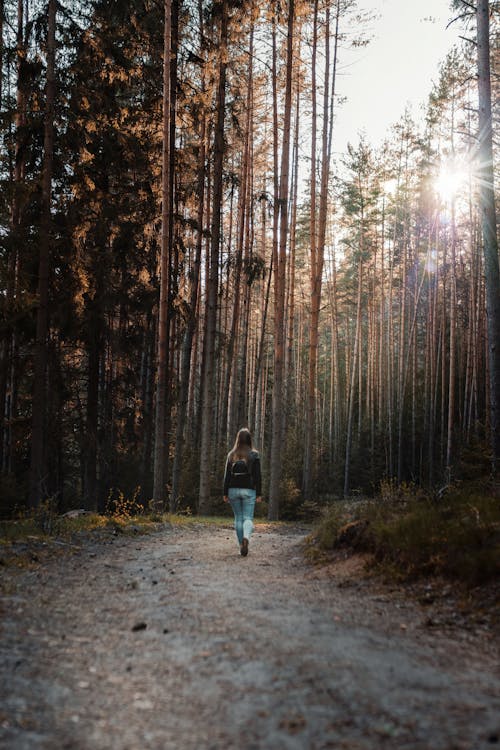
The best fall photoshoot location for most people is a forested trail with maples, oaks, or aspens at peak color. Falling leaves create a natural color backdrop, forest canopy light is softer and more flattering than open sky, and trails create natural leading lines and framing without any staging effort. Look for trails that receive morning light — the sun angle is lower and warmer earlier in the day during fall.
Arrive at least 30 minutes after sunrise. Earlier than that and the light is too low. Later than 90 minutes after sunrise and you’ve already lost the most dramatic angle. Check sunrise time for your specific location and date — it varies more than people expect by latitude and time zone.
Open Fields and Meadows
Open fields with dried grasses and late-season wildflowers photograph in fall with an earthy, dimensional quality that green summer meadows don’t have. Golden hour light across open terrain creates long shadows and a warmth that’s almost impossible to replicate artificially. The limitation: you need the light coming from the side, not overhead. Morning and late afternoon work; midday flattens everything.
Fields also give you room to work with the full-body poses and walking shots that forested trails can make difficult. For pose ideas that translate well in open outdoor settings, our poses for photos guide breaks it down by environment.
Urban Parks
City parks in fall are underused as photoshoot locations. Tree-lined paths with fallen leaves, park benches, stone bridges, wrought iron fences, and water features all create strong visual backdrops that require no scouting or special access. The advantage over remote trails: you can walk the location before your shoot day, the light is predictable because you know the surroundings, and logistics are simpler for group shoots.
Early morning is the best time in urban parks — you have paths largely to yourself, the light is golden, and there’s none of the flat midday foot traffic that makes getting clean frames difficult.
Waterfront Locations
Lakes, rivers, and coastal areas in fall produce reflections of autumn foliage that photograph dramatically differently than summer waterfront shots. The color, the reflection, and the lower sun angle combine for a natural scene that requires minimal composition effort. Morning mist on a still lake creates an additional visual element that looks like it required a film crew. The practical requirement: get there early, dress in layers, keep dry shoes in the car.
What to Skip
Pumpkin patches and apple orchards produce good content but everyone else’s feed looks exactly the same. If you go, use the location as a secondary stop — arrive at sunrise for the empty, dramatic version before the crowds arrive. The scarecrows-and-hay-bales aesthetic has enough saturation on Pinterest that it takes exceptional execution to stand out.
What to Wear for Fall Photos
The colors that work best against fall foliage: cream, rust, burgundy, camel, forest green, and warm white. These complement the warm seasonal palette without competing with it. Colors that don’t work against fall foliage: neon, bright blue, bright pink — they clash with the warm background and read as out of place regardless of how the photo is composed.
Outfit Formulas That Photograph Well in Fall
Oversized cream or tan sweater with straight-leg jeans and brown boots — the most versatile fall outfit for outdoor photography. Works in forest settings, open fields, and urban parks. Photographs well from every angle, layers naturally, and the neutral palette holds up against any fall foliage color.
Long coat in camel or burgundy with boots — photographs well from a distance because the coat creates a strong silhouette. Works especially well for walking-away shots and full-body frames where the outfit is the visual anchor. A camel coat against orange foliage is one of the most reliable fall photo combinations.
Flannel and denim jacket with hiking boots — works for trail locations and outdoor content with a more casual or active feel. The texture of flannel reads well in natural light and the layered look adds visual interest in outdoor frames.
What to Avoid
All-black outfits can disappear into dark forest backgrounds at certain exposures. All-white reads overexposed in direct golden hour light. Busy patterns compete with complex natural backgrounds — particularly problematic in forested settings where the background already has a lot of visual information. When in doubt, solid colors in warm neutrals win.
When to Shoot for Fall Light That’s Actually Different
Fall golden hour timing: sunset arrives earlier in fall than summer. In September, sunset is around 7pm across most of the US. By late October, it’s closer to 6pm. Golden hour starts 45 to 60 minutes before those times. Check your specific location’s sunset time for your shoot date — it varies by latitude.
The fall light advantage: the sun sits lower in the sky during fall and winter than summer. That lower angle creates longer shadows, stronger directional light, and a dimensional quality in photos that’s harder to achieve in summer. It also means golden hour lasts longer — you have more time to work the location.
For forested shoots specifically: early morning golden hour after sunrise often outperforms evening golden hour. The light comes through the trees from a lower angle and creates dramatic shafts and dappled patterns that disappear as the sun rises. If you can get there at sunrise, do it once — you’ll understand why immediately.
Overcast Days Are Not a Loss
Don’t automatically reschedule when it’s overcast. Overcast light is diffused, even, and flattering — it eliminates harsh shadows completely. Fall foliage colors are actually more saturated in overcast conditions because there’s no harsh direct light washing them out. An overcast morning in a maple grove often produces better color than a sunny golden hour in the same location. Test this once and you’ll stop dreading cloud cover on shoot days.
What to Bring
Camera
A camera with a 16-50mm or 18-55mm kit lens covers every fall scenario: wide for establishing landscape shots, longer end for portrait and close-up work with background blur. Both the Sony ZV-E10 and Canon EOS R50 handle fall natural light conditions cleanly — the automatic modes read warm golden hour light correctly without the color-cooling that some cameras apply in auto white balance mode. For full camera recommendations with current pricing, see our best camera for beginners guide.
Tripod
Essential for solo fall content. A tall tripod with a Bluetooth remote lets you set frames in advance and move freely within them. For trail shoots, a lightweight travel tripod (aluminum or carbon fiber) is easier to carry than a studio tripod. You don’t need carbon fiber for still photography — aluminum at 60+ inches extended is sufficient and costs significantly less.
Extra Battery
Cold weather reduces battery performance. On fall shoots in cool temperatures, expect 20-30% more battery drain than on summer shoots. Bring at least two spare batteries. This is a consistent failure point — the battery dies at the best light of the day. Plan for it.
Layers for Yourself
Fall shoots often start cold and warm up by midday. Plan an outfit that looks good at both temperature extremes — a flannel that can come off and tie around your waist, a light jacket that fits in a bag. Getting cold mid-shoot affects your posture and expression. Warmth during transit, shoot-ready outfit on-location.
Fall Photoshoot Ideas for Couples and Groups
Fall is the most popular season for couple photos for a reason — the warm colors, falling leaves, and extended golden hour window create conditions that make couple portraits look effortlessly good with minimal setup.
The couple poses that work best in fall: walking through fallen leaves on a trail (the classic for a reason — the movement and the leaves create a natural, dynamic frame), forehead touch against a tree with fall foliage in the background, sitting together in a pile of leaves at ground level, and close-up frames with a warm-toned blanket or coat as the anchor prop.
For engagement photo setups in fall specifically — camera positioning, autofocus settings for outdoor couple shoots, and how to use the tripod for self-directed sessions — our engagement photos guide has the complete walkthrough.
For solo fall content, the posing approaches that work best in outdoor natural settings are covered in full in our poses for photos guide.
Fall Photoshoot Ideas FAQ
What colors of fall foliage photograph best?
Peak orange and red — maples at maximum color — photograph the most dramatically in golden hour light because warm light amplifies warm foliage. Early fall yellows (aspens, birches) photograph well in any light. Late-fall browns are harder to work with — they require overcast light or strong compositional elements to look intentional rather than faded. Time your shoot to hit the peak two weeks before the leaves are fully down, not the week after.
What camera settings work best for fall photography?
For golden hour portrait work: ISO 100-400, aperture priority at f/2.8-4 for background blur and subject separation. Set white balance to “daylight” rather than auto — auto white balance on most cameras cools down golden hour light to “correct” it, which removes exactly the warmth you’re trying to capture. For landscape and establishing shots: f/8-11 puts everything in focus. For beginners: the camera’s automatic portrait mode reads fall golden hour conditions well and handles white balance better than most people’s manual settings.
When is the best time to book a fall photoshoot?
Two to three weeks after peak foliage: enough leaves have fallen to create texture on the ground, enough remain on trees for color in the background. Specific timing varies by region — New England peaks in mid-October, Pacific Northwest peaks in November, the South peaks late October to early November. Check AllTrails photo posts tagged by date for your specific trail — user-uploaded photos by season are the most accurate way to verify what a location looks like at a specific time of year.
Do I need a professional photographer for fall photos?
No. A tripod, a camera with face-tracking autofocus, and knowledge of where golden hour light hits in your chosen location are the three ingredients for fall photos that look professional. The planning — location, timing, outfit, specific poses — matters more than the equipment or whether a professional is present. Most of the difference between good and great fall photos comes from showing up at the right time in the right light, which costs nothing.
Can I shoot fall photos on a phone?
Yes, with some limitations. Phone cameras simulate background blur computationally — portrait mode on current iPhones produces acceptable results for social media at close distances. For printing, full-body frames, or situations where the subject is more than six feet from the camera, a dedicated camera with a proper lens produces visibly better results. For golden hour fall content at close range, a recent iPhone at golden hour is entirely capable. The constraint is background separation and image quality at larger sizes.
What’s the best fall location near me?
State parks and nature preserves with confirmed deciduous tree coverage are the most reliable starting point. Search AllTrails for your area and filter for trails with fall foliage user photos. Botanical gardens are another reliable option — curated and well-maintained, with varied visual environments in a compact area. For urban dwellers, any city park with mature tree canopy and a path provides enough visual material for a full fall session.
What time of year should I start planning fall content?
Now, regardless of when you’re reading this. Fall content published in late summer starts accumulating Pinterest saves three months before the September-October traffic spike. A fall photoshoot pin published in June has time to build save velocity through the summer, which signals Pinterest’s algorithm to distribute it more broadly when the seasonal search spike hits. The accounts that dominate fall photography content in September started pinning in June. That’s not luck — it’s timing.