
Engagement Photos: What Actually Makes Them Look Good
Disclosure: This post may contain affiliate links. I may earn a small commission if you click a link or make a purchase, at no additional cost to you. See my disclosure for more info.
Most couples walk away from their engagement photo shoot with a hundred pictures of two people standing in a park, not quite sure what to do with their hands. That isn’t the photographer’s fault — it’s a planning problem. The couples whose photos actually look good spent maybe twenty minutes before the shoot deciding three things: where they’d go, what they’d do when they got there, and what light they’d be shooting in. If you’re planning your own engagement photos, the Sony ZV-E10 is the camera we’d start with — it handles autofocus on moving subjects better than anything else in its price range, shoots clean stills and video in natural light, and doesn’t require a learning curve to get results on the first day.
OUR PICK
Sony ZV-E10
$649 | 4.5★ | 4,000+ reviews
The best beginner mirrorless for natural-light couple photos and video.
See it on AmazonALSO GREAT
Canon EOS R50
$679 | 4.5★ | 2,000+ reviews
Better autofocus for fast movement; ideal if you shoot a lot of action.
See it on AmazonWhy You Should Trust This
We filtered through the most-purchased beginner mirrorless cameras on Amazon — 4 stars minimum, 1,000 reviews minimum — and cross-referenced performance in natural light for both photos and video. Every recommendation in this guide was selected specifically for how it performs in the situations engagement photos actually happen in: outdoor trails, golden hour parks, overcast afternoon light, and low-light indoor settings. We wouldn’t suggest a camera we wouldn’t hand to someone on the day of their shoot.
How to Plan Engagement Photos That Actually Look Good
The three decisions that determine whether your engagement photos are good happen before a single shot is taken.
Location
Golden hour trails and open fields are the easiest environments to photograph in — soft directional light, natural backgrounds, no harsh shadows competing with faces. Urban settings (brick walls, empty streets, rooftops) give a completely different feel and work well on overcast days when the diffused light is flattering. Beach shoots produce dramatic photos but are logistically harder: sand, wind, and intense midday sun to avoid. Pick one primary location and one backup. Don’t try to cover three locations in one session — you’ll spend more time moving than shooting.
Timing
Golden hour is the 60 minutes after sunrise and the 60 minutes before sunset. The light is warm, diffused, and wraps around faces in a way that midday light never will. In fall and winter, golden hour arrives mid-afternoon. In summer, it’s close to 8pm. Check the exact sunset time for your shoot date and plan to be set up 75 minutes before that. That’s your window.
Outfits
Solid colors photograph cleaner than patterns. Neutral tones — cream, sage, rust, camel, navy — hold up against natural backgrounds without competing visually. Matching doesn’t mean identical; it means complementary. One critical detail: wear the outfit at least twice before shoot day so you know how it moves. New clothes feel stiff, and stiff clothes read in photos.
Engagement Photo Poses That Look Natural
The stiff, standing-side-by-side pose is what happens when neither person knows what to do. Here are the poses that consistently produce the best results — and why each one works. For solo posing by situation, see our full poses for photos guide.
The Walk
Hold hands and walk slowly toward or perpendicular to the camera. Look at each other mid-stride rather than at the lens. Movement eliminates the stiff quality that destroys standing poses. If you want a camera-facing frame, look at the camera during a mid-laugh moment rather than holding a fixed smile.
The Forehead Touch
Faces close together, foreheads resting against each other, eyes closed or half-closed. This works because it creates genuine physical closeness without requiring anyone to perform happiness. It photographs well from a slight overhead angle and in dappled forest light.
The Dip
One partner dips the other. Genuine laughter almost always follows, which means the photo ends up looking candid rather than posed. The best version has both people mid-laugh. It requires zero photography experience to pull off — just actually do the dip rather than faking it.
The Walk Away
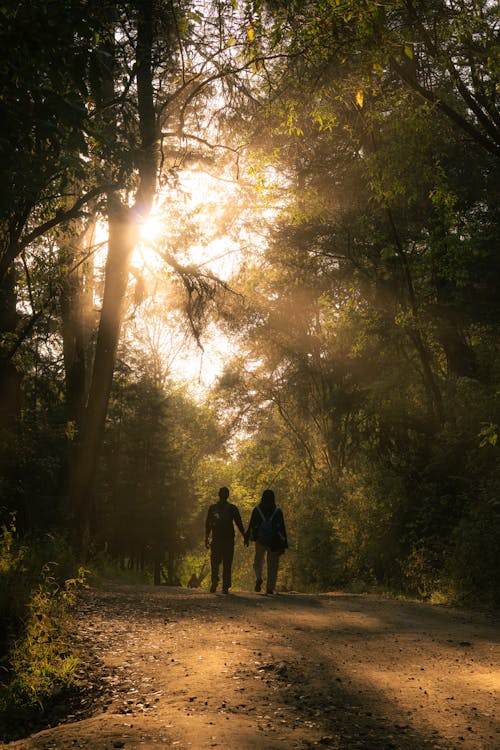
Both partners walking away from the camera, hand in hand. Shoot from behind at a slight elevation. This works because it removes the pressure of performing for the lens — neither person is managing their expression. Natural posture and movement come through.
The Sitting Pose
One partner sits on steps, a log, or a low wall while the other stands or kneels beside them. Height variation makes photos more visually interesting than two people at the same level. Works in almost any environment and requires no specific backdrop.
The Close-Up
Two faces close together, looking at each other or in the same direction. Works best in soft light — golden hour, open shade, or overcast sky. The camera focuses on the faces and blurs the background, which is why you need a lens that creates background separation. The ZV-E10 kit lens does this at the longer end of its zoom range.
The Camera We’d Bring to an Engagement Shoot
You don’t need a professional camera for engagement photos that look good. You need a camera that handles autofocus reliably in natural light and lets you shoot without thinking about settings. That’s the filter every camera here went through.
Sony ZV-E10
$649 | 4.5 stars | 4,000+ reviews
Why we picked it: The ZV-E10 was built for vloggers and content creators, which turns out to be exactly the right design brief for engagement photos. Its Eye AF system locks onto faces and holds focus through movement — walking, laughing, mid-dip — without requiring any configuration. The 24.2MP APS-C sensor handles golden hour and outdoor natural light cleanly. The body is small enough to carry on a trail without feeling like you’re hauling gear, and it shoots 4K video if you want short reels from your session.
The catch: Battery life is modest — plan on two spare batteries for any session longer than 90 minutes. The Sony NP-FW50 batteries are inexpensive and widely available.
Canon EOS R50
$679 | 4.5 stars | 2,000+ reviews
Why it made the list: The R50’s Dual Pixel CMOS AF II autofocus tracks eyes, faces, bodies, and whole subjects even as they move through frame. For fast-moving couple poses — the dip, running toward each other, mid-laugh movement — the R50’s tracking is slightly more reliable than the ZV-E10’s. Image quality is excellent and it handles low light better.
The catch: Slightly bulkier than the ZV-E10. The kit lens produces more distortion at the wide end, which matters for close-up couple portraits.
For a full breakdown of beginner camera options with current Amazon pricing and review counts, see our best camera for beginners guide.
Engagement Photo Locations Worth Booking
State Parks and Trail Systems
Forested trail systems give you natural backgrounds, dappled light, and leading lines without any styling effort. Look for trails with a mix of open meadow sections and forested sections — you’ll get two completely different visual environments in one location. Arrive 90 minutes before sunset in fall; 60 minutes before sunset in summer.
Botanical Gardens
Botanical gardens offer curated backgrounds — manicured hedges, water features, rose gardens, glass greenhouses — that require no scouting to work. Most require a permit for commercial photography; personal and engagement shoots are usually covered under general admission. Check before you go.
Urban Architecture
Old brick buildings, empty early-morning city streets, industrial alleys, rooftop terraces. Urban engagement photos are underused and produce results that stand out from the trail-and-meadow majority. Shoot on overcast mornings before foot traffic picks up and you have most locations to yourself.
Waterfront Spots
Lakes, rivers, coastal cliffs. Reflections and horizon lines add compositional depth that’s hard to achieve inland. Early morning mist on a lake produces photos that look like they required a professional crew. The logistics: get there before sunrise, dress in layers, and have dry shoes waiting at the car.
Engagement Photo FAQ
Do we need a professional photographer for engagement photos?
No. Couples with a tripod, a camera with face-tracking autofocus, and a basic plan for poses and lighting consistently produce results that are indistinguishable from professionally shot photos in social and print contexts. The biggest advantage of a professional is real-time creative direction — they’ll tell you what to do with your hands. You can replace that with twenty minutes of research and six specific poses written on your phone to cycle through.
What should we wear for engagement photos?
Solid colors in neutral tones. Avoid logos, busy patterns, and anything that visually competes with the setting. If one person is wearing a patterned shirt, the other should wear solid. The rule that matters most: wear the outfits at least twice before shoot day. New clothes feel stiff, and stiff clothes show in photos.
What time of day should we shoot?
The 60 minutes before sunset. Check the exact sunset time for your location and date, plan to be set up 75 minutes before that. That’s when the light is warmest and most flattering. Midday sun creates harsh shadows under eyes and noses — avoid it for portrait work.
How many locations should we plan for one session?
One location with two distinct visual backgrounds within it — a field and a tree line, for example. Moving between three separate locations in a single session means more time in transit than shooting, and you lose light. Find one location that gives you visual variety without logistical complexity.
Can we do our own engagement photos without a photographer?
Yes, with two things: a tripod tall enough to frame your full body (60 inches minimum extended), and a camera with a remote shutter trigger or Bluetooth remote capability. Set the camera, frame the shot, and shoot in burst mode through each pose. Out of 40 frames per pose cycle, you’ll consistently get several that are exactly what you wanted.
Should we edit our engagement photos?
A light edit, yes. The most common adjustments: reduce highlight brightness slightly, add a small amount of warmth to match the golden hour feel, bump clarity slightly for sharper detail in hair and textures. Most couples use Lightroom Mobile — it’s free, processes a full session in under an hour, and the presets designed for outdoor natural light are very close to what you want out of the box.