
The Complete Creator Gear Guide: Tripods, Lights, and Flash for Better Photos
Disclosure: This post may contain affiliate links. I may earn a small commission if you click a link or make a purchase, at no additional cost to you. See my disclosure for more info.
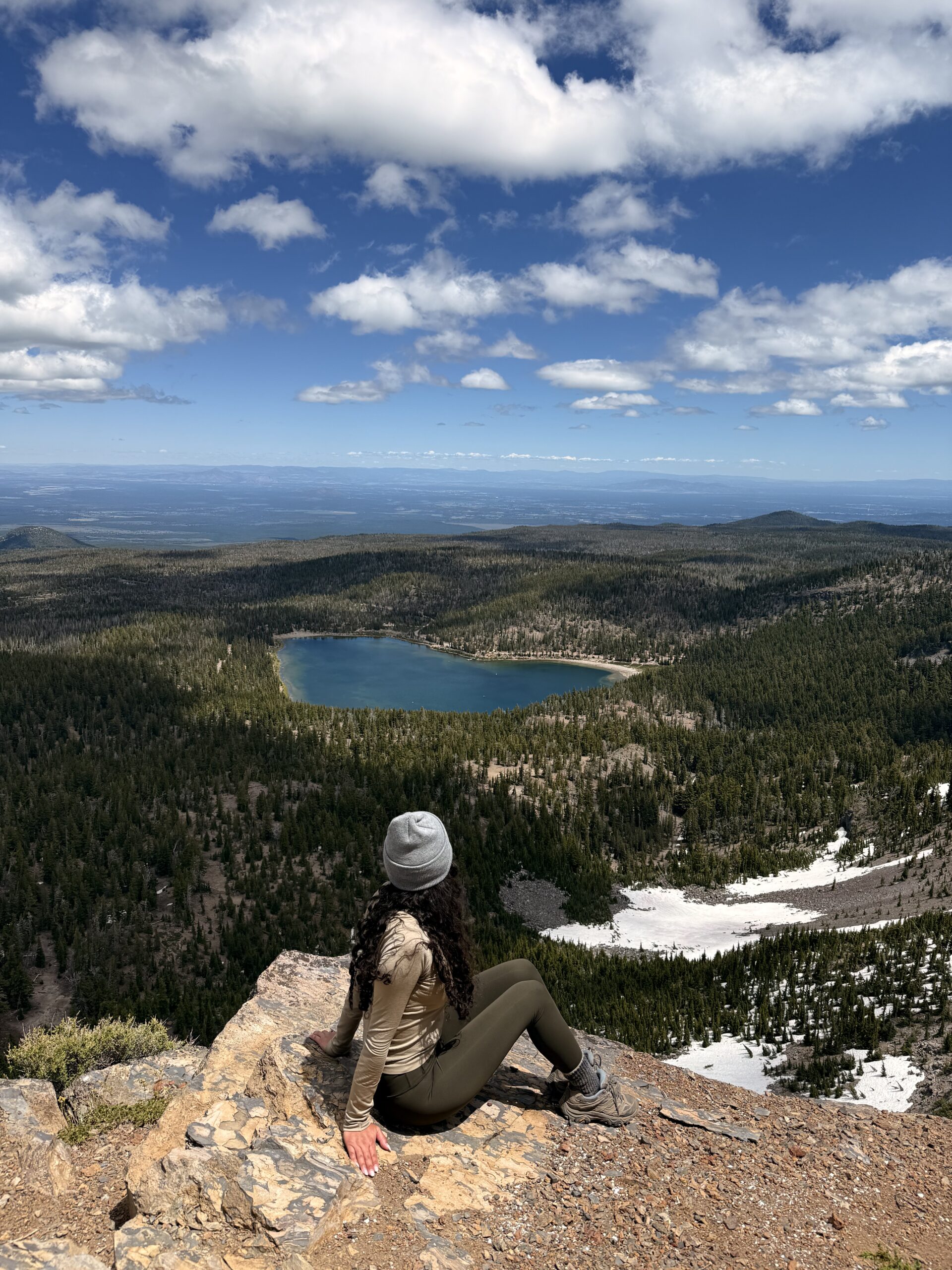
You handed your phone to a stranger and got your left ear. Your friend cut off your feet. The timer cost you three sprints across the sand before the light changed. None of this is your fault — you just don’t have the right setup. This guide covers the complete gear stack: the tripods that solve the angle problem, the ring lights and LED panels that solve the indoor lighting problem, and the flash that takes your camera shots to the next level. Start with the tripod. Add light when you need it. Upgrade the camera when you’re ready.
OUR PICK
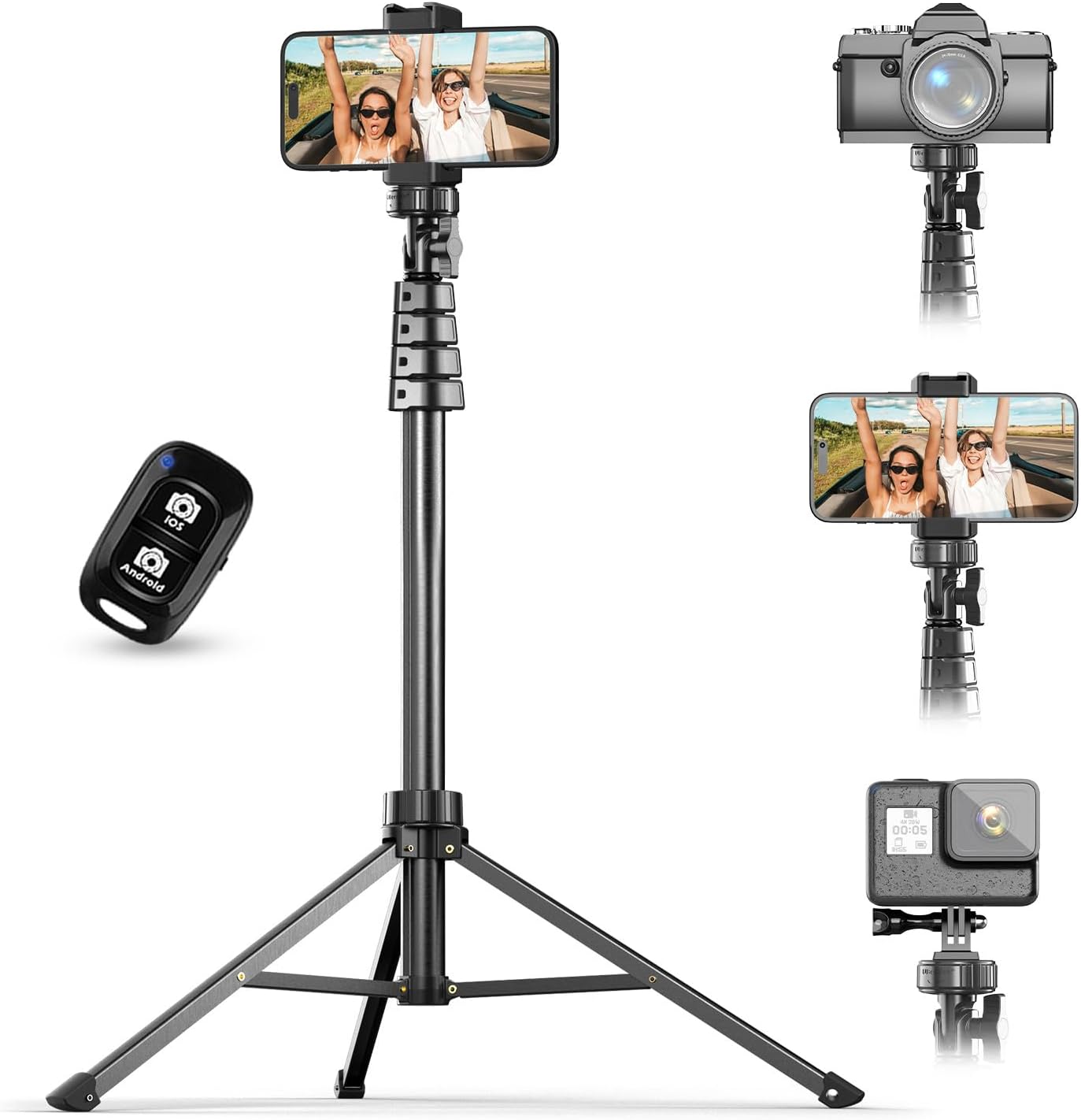
UBeesize 62" Tripod + Bluetooth Remote
$25 | 4.6★ | 89,666 reviews
The tripod we keep coming back to. Extends to 62 inches (eye level), Bluetooth remote included, folds to 16 inches. Outdoor, beach, travel — the one that works everywhere.
Tighten the ball head one click past where you think it’s set at full extension.
ALSO GREAT

EUCOS 62" Tripod + Remote
$22.99 | 4.6★ | 21,250 reviews
21,250 reviews at 4.6 stars — competitive numbers, $2 cheaper. Functions identically to the UBeesize. If the main pick is out of stock, this is the call.
Also extends to 62 inches. Bluetooth remote included.
SHOP OUR GEAR PICKS
Tripods, Ring Lights, Flashes, and Creator Accessories
Every piece of gear on this page — and more — in one curated list.
Browse Our Gear & Accessories List →
Link coming soon — check back
As an Amazon Associate we earn from qualifying purchases. This does not change the price you pay.
Why trust these picks
Every product on this page was checked against its live Amazon listing. Minimum bar to make the list: 4+ stars and 1,000+ reviews. The main pick has 89,666 reviews at 4.6 stars. That’s not marketing. That’s tens of thousands of people who bought it, used it, and came back to rate it. Our filter is simple — if we wouldn’t recommend it to a friend, it’s not here.
The tripod section: which one, and why
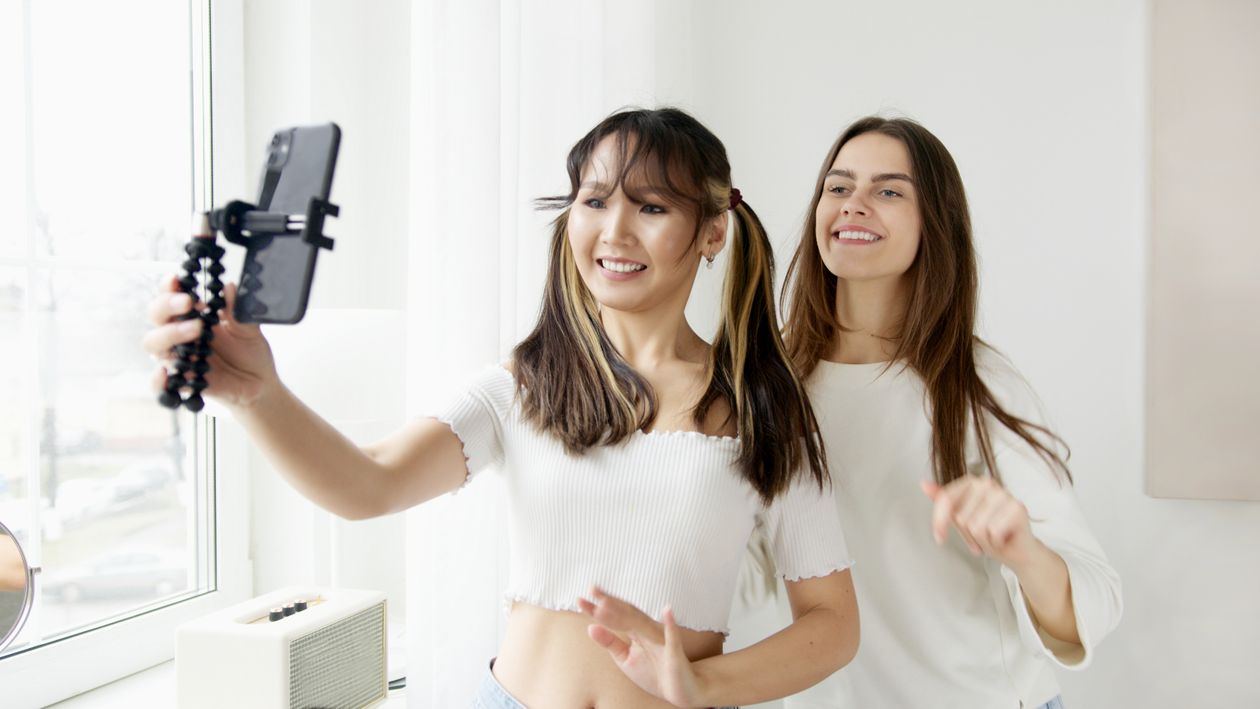
Most people buy the wrong tripod — too short, no remote, or good enough for a table shot but useless on a beach. Here’s the breakdown by use case. If you shoot outdoors, you want 62 inches. If you shoot indoors with bad light, you want the ring light combo. If you need something that fits in your jacket pocket, get the flexible mini.
Why 62 inches matters
Most phone tripods max out at 50 inches — that’s hip level. The lens points down at your face from above, which is the angle that makes everyone look shorter and gives the frame a “phone propped on a table” look. 62 inches puts the lens at eye level or slightly above. That’s the angle that looks like someone else took it — and the difference in how the photo reads is immediate. Every full-body outdoor photo where you want to look tall and in the frame: 62 inches is the minimum.
The main pick: UBeesize 62" Tripod + Bluetooth Remote
$25 | 4.6★ | 89,666 reviews
Why we picked it: 89,666 reviews at 4.6 stars is a number you don’t fake. It extends to 62 inches — tall enough to frame your full body — and the Bluetooth remote means you’re not sprinting back to beat a timer. Works with phones, compact cameras, and action cameras via a standard 1/4″-20 thread. Folds down to 16 inches. Fits in a beach bag. Used in six of our posts and hasn’t given us a reason to switch.
The catch: The ball head can loosen at full extension over time. Tighten it one click past where you think it’s set and it holds. On a windy beach, 50-55 inches is more stable than the full 62.
Also great: EUCOS 62" Tripod + Remote
$22.99 | 4.6★ | 21,250 reviews
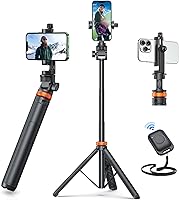
Why it’s a strong second: 21,250 reviews at 4.6 stars — the same top rating as our main pick, at $2 less. Functions identically: 62-inch height, Bluetooth remote, standard thread mount. If you can’t find the UBeesize in stock or want to compare, this is the call. The main difference is that the UBeesize has nearly 4x the review count, which is the stronger social proof signal.
The catch: Slightly less review volume means slightly less certainty. But 21,250 at 4.6 stars is still a very strong number — not a concern.
Best for travel: Aureday Flexible Mini Tripod
$12.99 | 4.4★ | 6,495 reviews
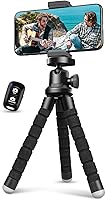
Why you’d want this one: The flexible legs wrap around branches, rails, rocks, tables — any surface where a straight tripod can’t stand. It’s the right tool when you’re hiking and want a shot with your pack on at a scenic overlook, or when you want a table-level camera angle at a coffee shop. Bluetooth remote included. Fits in your pocket.
The catch: Maximum height is about 10 inches — this is a surface tripod, not a full-height one. Buy this in addition to the 62-inch, not instead of it.
Best for indoor: UBeesize Ring Light + Tripod
$35 | 4.4★ | 98,192 reviews
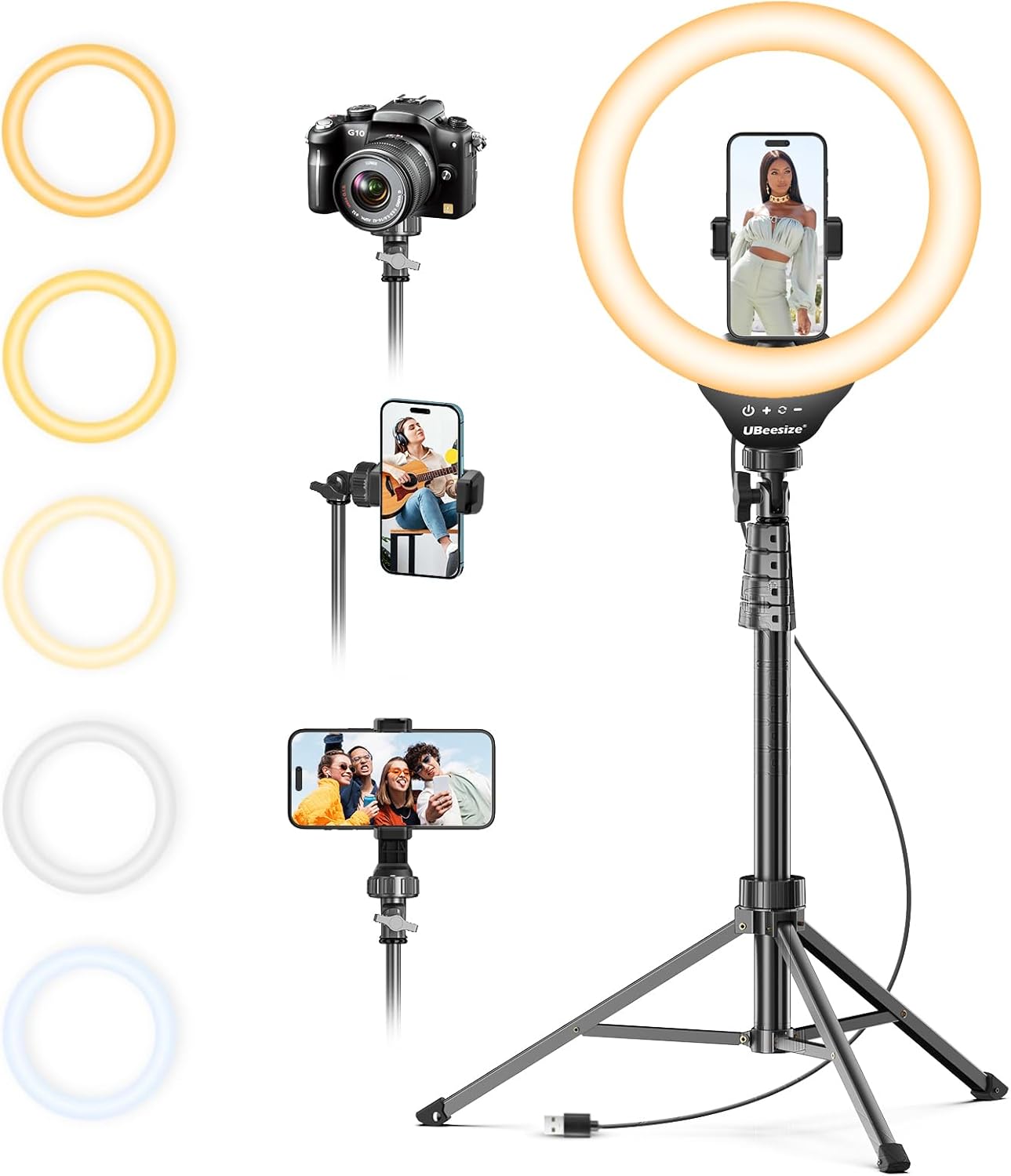
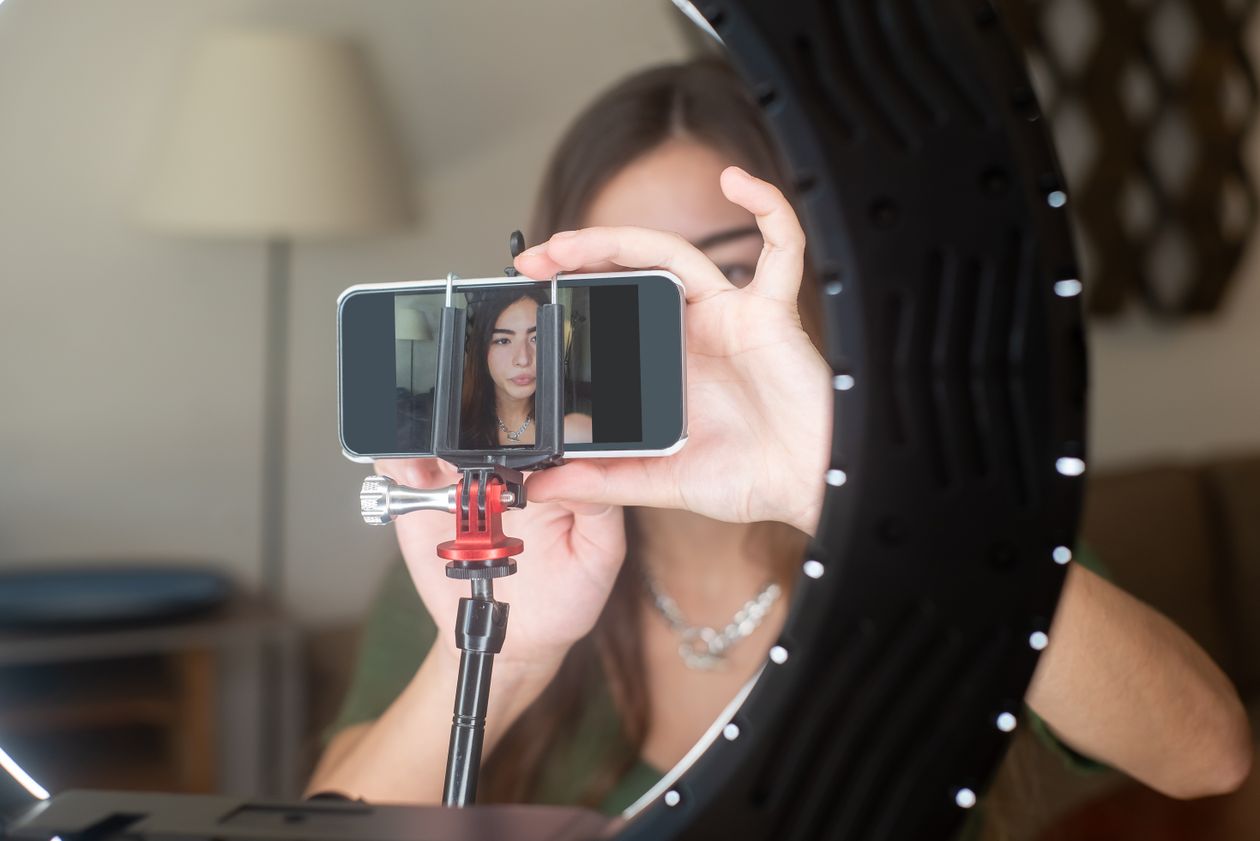
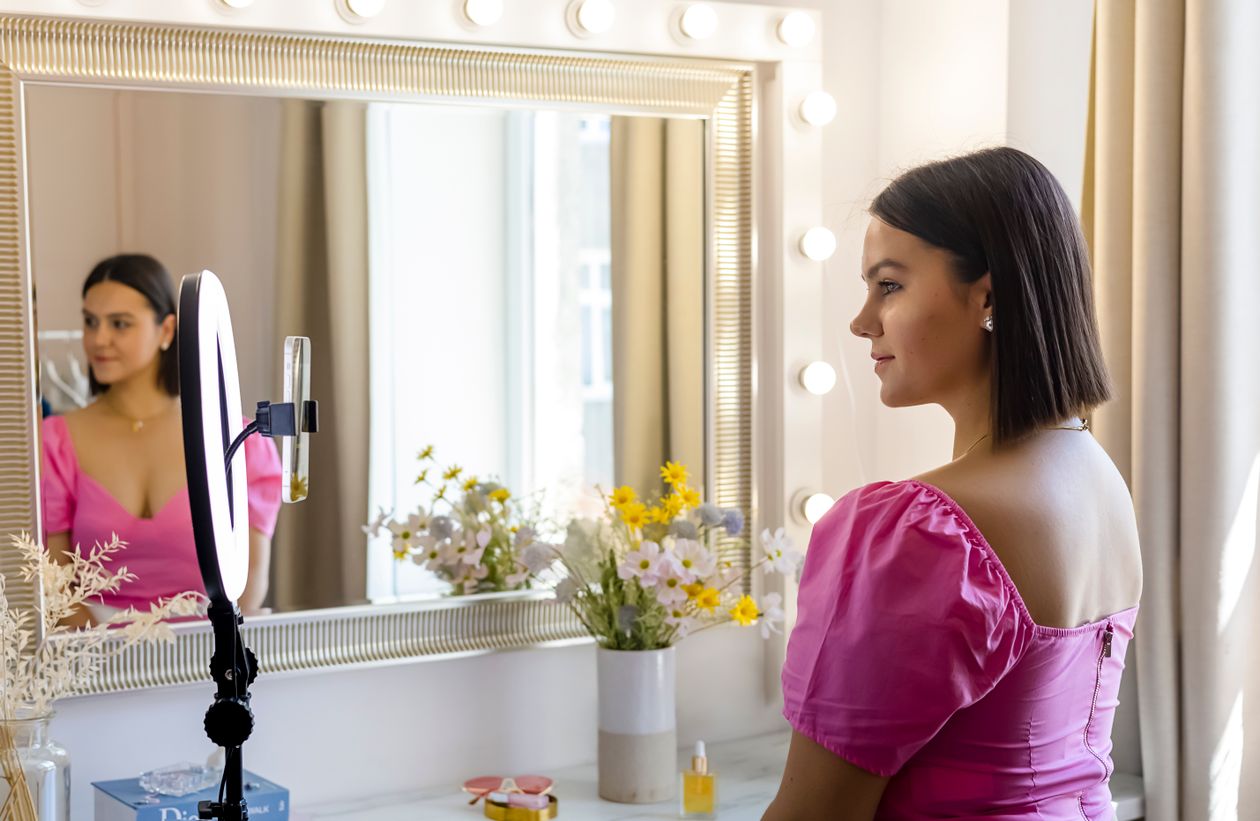
Why it’s the indoor pick: If you’re shooting in a cafe, bedroom, or in front of a mirror, outdoor lighting advice doesn’t help you. The ambient light in those spaces is usually overhead fluorescents or warm lamps — both create flat, unflattering light. The ring light sits at face level and delivers soft, even, front-on light. 98,192 reviews at 4.4 stars. Three color temperatures. Phone mount clips to the centre of the ring so the light and camera are on the same axis. This is the setup behind most good indoor mirror pics.
The catch: The 12-inch ring lights a face and upper body well. It won’t light a full room or a group. For wider coverage, the Lume Cube Panel Mini is a better option.
The lighting section: when you need to add light
The tripod solves the angle problem. But if the light is bad, no amount of good angle fixes the photo. There are two lighting scenarios to know: continuous light (ring lights, LED panels — always on, you see exactly what you’re getting) and flash (a single burst of light at the moment of capture — brighter, more powerful, requires a dedicated camera). For phone shooting, continuous LED is the right tool. For camera shooting, flash is the step up that changes everything.
Best portable LED for phone: ALTSON 60 LED Clip Light
$13.88 | 4.6★ | 5,551 reviews

What it does: A rechargeable clip light that attaches directly to your phone or clips to a tripod. 60 LEDs, three color temperatures (warm/natural/cool), CRI 97+ which means the color of the light is close to natural daylight. At $13.88 it’s the cheapest fix for bad indoor lighting: clip it on, point it at your face, and the flat overhead-light problem disappears immediately.
When to use it: Coffee shop shots where the window light is behind you. Hotel room selfies. Any outdoor evening shot where the ambient light is dropping but you’re not done shooting.
The catch: It’s small — 60 LEDs doesn’t replace a full ring light. For a focused face-and-shoulders shot it works well. For full-body indoor shots, the ring light combo is still the better tool.
Best camera flash: Neewer TT560 Speedlite Flash
$62.99 | 4.5★ | 12,906 reviews
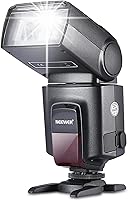
What it does: A hot-shoe mounted flash that attaches to the top of a DSLR or mirrorless camera and fires a burst of light at the moment of capture. The flash output is vastly more powerful than a ring light — it freezes motion, fills harsh shadows, and gives photos that look-lit quality that distinguishes professional shots from snapshots. Compatible with Canon, Sony, Nikon, and most other DSLRs.
When to use it: Golden hour outdoor shoots where the backlight is creating silhouettes. Indoor evening shots where ambient light is too dim. Any situation where you want the subject clearly lit regardless of background conditions. This is the piece of gear that makes the jump from “nice photo” to “editorial.”
Who this is for: Someone who already has a dedicated camera — a Canon G7X, a Sony ZV-1, or a DSLR. The flash mounts to the camera’s hot shoe and fires automatically. You don’t need any photography knowledge to start — auto mode works fine.
The catch: This is a camera flash — it does not work with a phone. If you’re shooting entirely on iPhone, get the LED clip light instead. The flash is the upgrade path for someone who has or is getting a camera.
The creator stack: build by level
You don’t need everything at once. Here’s the order that makes sense — each level solves a specific problem before you move to the next one.
| Level | Gear | Cost | What it solves |
|---|---|---|---|
| 1 — Start here | UBeesize 62″ tripod + remote | $25 | Bad angles, needing a stranger, sprinting for the timer |
| 2 — Add light (phone) | + ALTSON LED clip light | $14 | Flat indoor lighting, bad cafe light, fading outdoor shots |
| 2b — Add light (indoor setup) | + UBeesize ring light + tripod | $35 | Mirror pics, bedroom, home studio — full face-level soft light |
| 3 — Travel setup | + Aureday flexible mini tripod | $13 | Hiking shots, table-level angles, any surface where a straight tripod won’t stand |
| 4 — Camera upgrade | A dedicated camera — see our camera picks | $400-800 | Photo quality ceiling — bigger sensor, better low light, more control |
| 5 — Flash | + Neewer TT560 flash | $63 | Editorial lighting quality — flash fills harsh shadows and freezes motion |
The camera upgrade: when you’re ready to go beyond your phone
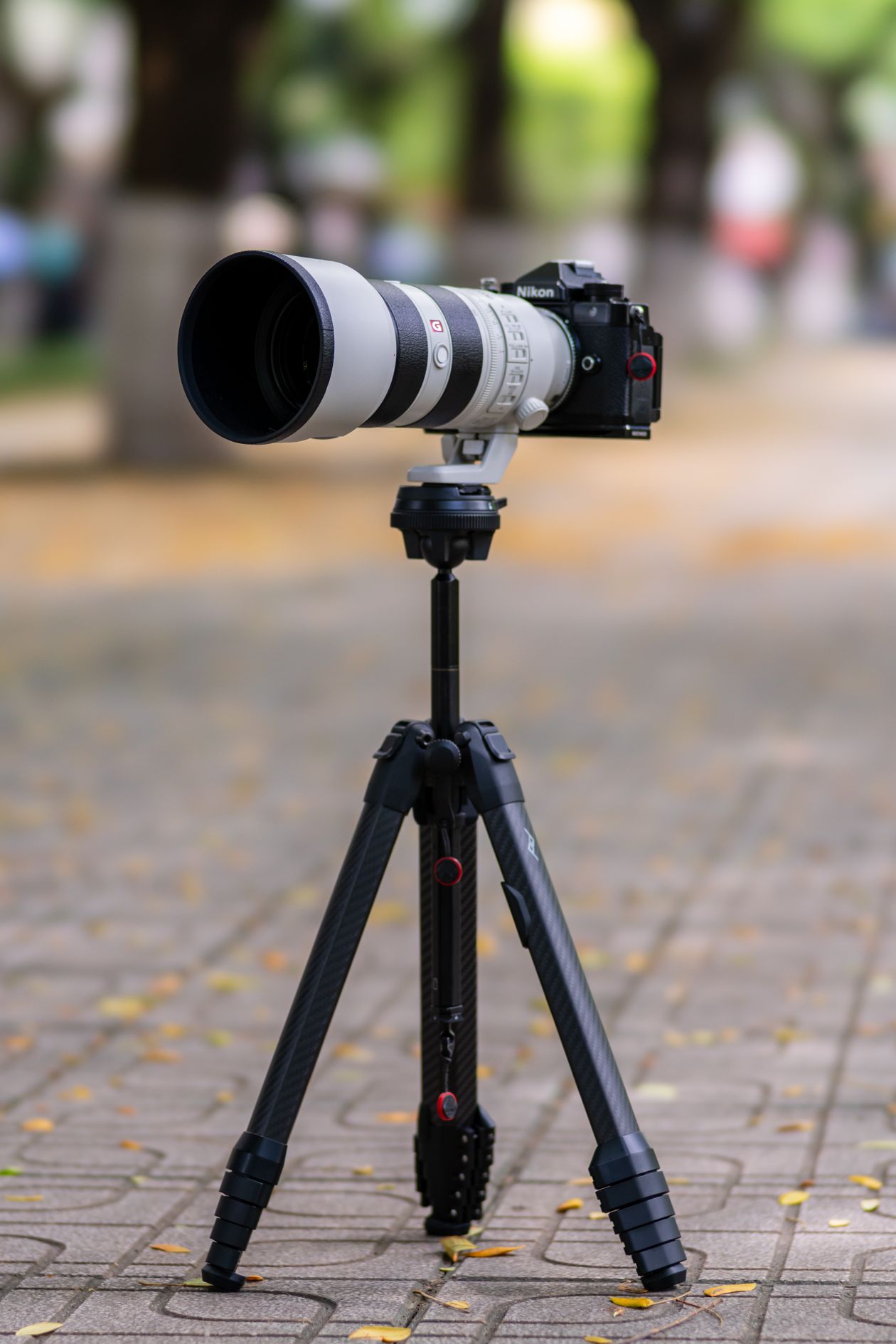
Your phone is genuinely good — modern iPhone and Android cameras are impressive. But there’s a ceiling. The sensor is small, which means low-light performance is limited. The lens is fixed, which means you can’t control depth of field. The photo processing is aggressive, which means skin tones and highlights often look artificial. A dedicated camera — specifically a point-and-shoot or mirrorless — removes those limitations and makes every piece of gear you already own work harder.
The best first camera for the picinspo audience is a compact point-and-shoot: the Canon G7X Mark III is the most recommended option — large sensor for a compact camera, outstanding low-light performance, flip screen for self-shooting, and it mounts directly to both the 62-inch tripod and accepts the Neewer flash via hot shoe. See our full breakdown in the best digital cameras and best camera for beginners guides.
OUR CAMERA PICKS
Point-and-Shoots, Compact Cameras, and Beginner-Friendly DSLRs
Every camera we’d recommend for the picinspo audience — from $150 film cameras to the Canon G7X.
Link coming soon
What to wear for outdoor and golden hour shots
Gear solves the technical problems. But the photos that stop people mid-scroll combine good gear with the right outfit in the right light. For outdoor shots — golden hour on the beach, hiking trails, city streets at dawn — neutral solid colors photograph best. A white or cream linen top in golden hour light, with the 62-inch tripod set at eye level and a Bluetooth remote in your hand, is a complete photo setup that produces photos worth posting every time. For the outfit side of the equation, the minimalist style guide covers exactly what to wear in every setting — including which pieces photograph best in outdoor, city, and indoor environments.
For outdoor poses that work with a tripod — angles to set, distances to shoot from, the moves that look natural and not stiff — the poses for photos guide covers the specifics. For beach specifically, beach poses for women has the formulas that make a tripod setup at the shoreline work.
The lighting section: when you need to add light
The tripod solves the angle problem. But if the light is bad, no amount of good angle fixes the photo. There are two lighting scenarios to know: continuous light (ring lights, LED panels — always on, you see exactly what you’re getting) and flash (a single burst of light at the moment of capture — brighter, more powerful, requires a dedicated camera). For phone shooting, continuous LED is the right tool. For camera shooting, flash is the step up that changes everything.
Best portable LED for phone: ALTSON 60 LED Clip Light
$13.88 | 4.6★ | 5,551 reviews
What it does: A rechargeable clip light that attaches directly to your phone or clips onto a tripod. 60 LEDs, three color temperatures, CRI 97+ which means the color is close to natural daylight. At $13.88 it’s the cheapest fix for bad indoor lighting: clip it on, point it at your face, and the flat overhead-light problem disappears immediately.
When to use it: Coffee shop shots where the window is behind you. Hotel room selfies. Any outdoor evening shot where the light is dropping but you’re not done shooting.
The catch: Small form factor — 60 LEDs works well for face-and-shoulders shots. For full-body indoor shots, the ring light combo is the better tool.
Best camera flash: Neewer TT560 Speedlite Flash
$62.99 | 4.5★ | 12,906 reviews
What it does: A hot-shoe mounted flash that attaches to the top of a DSLR or mirrorless camera and fires a burst of light at the moment of capture. The flash output is vastly more powerful than a ring light — it freezes motion, fills harsh shadows, and gives photos that lit quality that distinguishes professional shots from snapshots. Compatible with Canon, Sony, Nikon, and most other DSLRs.
When to use it: Golden hour outdoor shoots where backlight is creating silhouettes. Indoor evening shots where ambient light is too dim. Any situation where you want the subject clearly lit regardless of background conditions. This is the piece of gear that makes the jump from nice photo to editorial.
Who this is for: Someone who has a dedicated camera — a Canon G7X, a Sony ZV-1, or a DSLR with a hot shoe. Auto mode works fine to start.
The catch: Camera flash only — does not work with a phone. If you’re shooting entirely on iPhone, get the LED clip light instead. The flash is the upgrade path for someone who has or is getting a camera.
The creator stack: build by level
You don’t need everything at once. Here’s the order that makes sense — each level solves a specific problem before you move to the next one.
| Level | Gear | Cost | What it solves |
|---|---|---|---|
| 1 — Start here | UBeesize 62″ tripod + remote | $25 | Bad angles, strangers, sprinting for the timer |
| 2 — Add light (phone) | + ALTSON LED clip light | $14 | Flat indoor lighting, bad cafe light, fading outdoor shots |
| 2b — Indoor setup | + UBeesize ring light + tripod | $35 | Mirror pics, bedroom, home studio — full face-level soft light |
| 3 — Travel setup | + Aureday flexible mini tripod | $13 | Hiking shots, table-level angles, any surface where a straight tripod won’t stand |
| 4 — Camera upgrade | A dedicated camera — see our camera picks | $400–800 | Photo quality ceiling — bigger sensor, better low light, more control |
| 5 — Flash | + Neewer TT560 flash | $63 | Editorial lighting quality — fills harsh shadows, freezes motion |
The camera upgrade: when you’re ready to go beyond your phone
Your phone is genuinely good — modern iPhone and Android cameras are impressive. But there’s a ceiling. The sensor is small, so low-light performance suffers. The lens is fixed, so you can’t control depth of field. The processing is aggressive, so skin tones and highlights often look artificial. A dedicated camera removes those limitations and makes every piece of gear you already own work harder.
The best first camera for the picinspo audience is a compact point-and-shoot. The Canon G7X Mark III is the most recommended option — large sensor for a compact, outstanding low-light performance, flip screen for self-shooting, and it mounts directly to both the 62-inch tripod and accepts the Neewer flash via hot shoe. See the full breakdown in the best digital cameras and best camera for beginners guides.
OUR CAMERA PICKS
Point-and-Shoots, Compact Cameras, and Beginner DSLRs
Every camera we’d recommend — from film and instant cameras to the Canon G7X. Link coming soon.
What to wear for outdoor and golden hour shots
Gear solves the technical problems. But the photos that stop people mid-scroll combine good gear with the right outfit in the right light. For outdoor shots — golden hour on the beach, hiking trails, city streets at dawn — neutral solid colors photograph best. A white or cream linen top in golden hour light, with the 62-inch tripod set at eye level and a Bluetooth remote in your hand, is a complete setup that produces photos worth posting every time. For the outfit side: the minimalist style guide covers exactly what to wear in every setting, including which pieces photograph best outdoors, in the city, and indoors.
For poses that work with a tripod — angles to set, distances to shoot from, the moves that look natural — the poses for photos guide covers the specifics. For beach specifically, beach poses for women has the formulas for tripod setups at the shoreline. And for making the most of the best light of the day, the golden hour guide covers timing, positioning, and camera settings.
Tripod technique: get more from your setup
Set the height before you go
Adjust the tripod to the right height at home, not on location. 62 inches for full-body standing shots. 50-55 inches for seated or low shots. Mark the leg position with tape once you find it — you’ll stop fiddling with it on location and spend that time actually shooting.
Use burst mode with the remote
The Bluetooth remote fires one shot per click. But burst mode (hold the shutter on iPhone) captures 10+ frames per second. Set burst mode before the shoot, click the remote once at the peak of a movement — walking, turning, hair flip — and you have 20 frames to pick from instead of 1. The best photo from a burst always looks more natural than a posed still.
Shoot toward the light, not away from it
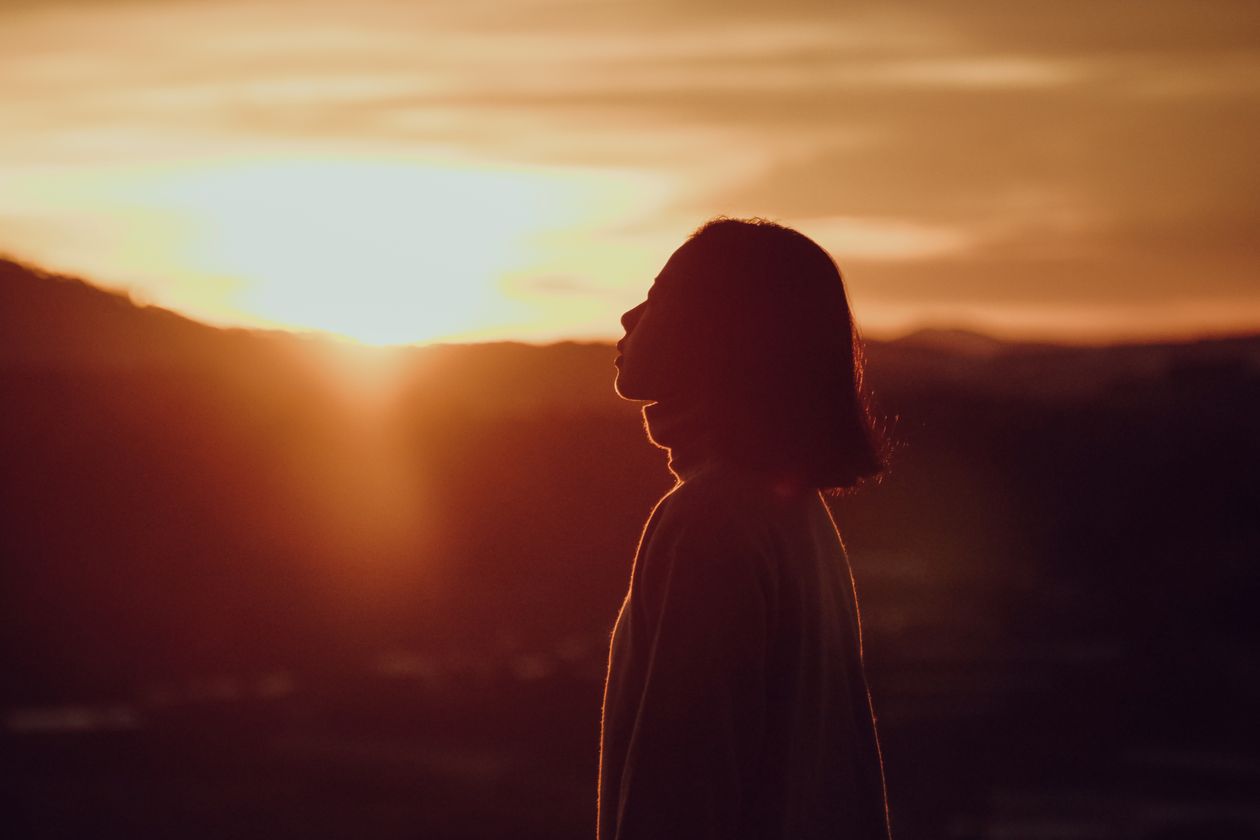
Most people set up with the sun behind the camera. It lights the subject, but creates harsh facial shadows and a flat overlit image. Turn around. Face the light source and shoot into it — the background glows warmly, the subject gets a rim light, and the photo reads as golden hour rather than a snapshot. Set the tripod facing the light source, step into frame, shoot.
Use the grid
Turn on the grid in your camera app. Position yourself at one of the vertical third lines — not centered. Centered subjects read as passport photos. A subject at one third, with space on the other side, reads as intentional framing. If you’re walking in the shot, leave space in the direction you’re walking. Two-second grid toggle. Every photo reads better.
FAQ
Does the 62″ tripod work on sand?
Yes, but push the legs an inch or two deeper than you think you need — sand shifts under weight. The feet are pointed, not flat, which helps anchor on outdoor surfaces. On a windy beach, shoot at 50-55 inches rather than full extension. For beach photos specifically, see the beach poses guide for the full setup.
Will the Bluetooth remote work with my iPhone?
Yes. Pair it in Bluetooth settings like any other device. Works with the native iPhone camera app and any third-party app that accepts volume-button triggers. On Android, same process.
Standalone tripod or ring light combo — which first?
Depends on where you shoot most. If you shoot outdoors 80% of the time: standalone 62-inch tripod ($25), add the LED clip light ($14) for the occasional indoor shot. If you shoot indoors most: ring light combo ($35) — you get both tripod and lighting together. If you’re unsure: the ring light combo is the safer first purchase because you can turn the light off when you don’t need it.
Does this tripod work with a Canon G7X or other compact cameras?
Yes. Both the UBeesize and EUCOS tripods have a standard 1/4″-20 thread mount — the universal screw size for cameras. The Canon G7X, Sony ZV-1, and virtually every compact camera use this mount. The tripod you bought for your phone will work with any camera you buy later. See the best camera for beginners guide for which camera pairs best with this setup.
What’s the point of the flash if I can just use a ring light?
Ring lights provide continuous light — always on, consistent, great for video and close-up phone photography. Flash provides an instantaneous burst — much more powerful, freezes motion, creates the sharp, defined quality associated with editorial and fashion photography. A ring light is soft and flattering. A flash is bright and defining. They do different jobs. Most photographers who shoot seriously outdoors use flash to fill shadows during golden hour — it’s the difference between a nice photo and a shot that looks like it was taken by a photographer. The Neewer TT560 only works with cameras that have a hot shoe — it’s not a phone accessory.
What if I want better photos but don’t want to buy a camera?
The tripod + remote is the single highest-ROI upgrade for phone photography. Getting the angle right and taking your own photo without asking strangers transforms what your phone produces. After that, the LED clip light fixes the indoor problem for $14. Most people don’t need a camera — they need better technique and a $25 tripod. For technique: poses for photos, golden hour tips, and the minimalist style guide for what to wear.
Is the flexible mini tripod good for video?
Yes — the flexible legs wrap around anything stable: a rock, branch, railing, table. For travel vlogging, quick talking-head shots, or any situation where you want a creative low angle, the flexible mini does things the 62-inch can’t. The Bluetooth remote works with video recording on most phones — one click to start, one click to stop.
SHOP ALL GEAR PICKS
Tripods, ring lights, flashes, and creator accessories
Every piece of gear from this guide in one curated list. Updated regularly.
Browse Our Gear & Accessories List →
Ready to upgrade to a camera?
As an Amazon Associate we earn from qualifying purchases. Links will be updated to direct lists as they go live.
ALL GEAR FROM THIS GUIDE


