
We Built a Real Espresso Setup, Got Good at It, Then Sold Everything Before Moving to Spain
Disclosure: This post may contain affiliate links. I may earn a small commission if you click a link or make a purchase, at no additional cost to you. See my disclosure for more info.
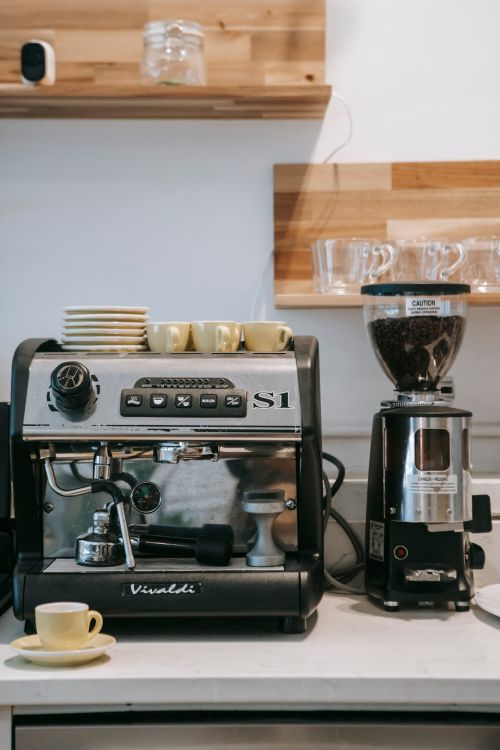
We didn’t set out to become coffee people. We just got tired of spending $15 a day on drinks we could make better at home. A year later we had a setup we were genuinely proud of, a workflow we’d dialed in, and then we sold all of it before moving to Spain because the voltage is different there and none of it was worth shipping with adapters. We figured it was actually a good time to upgrade anyway. Here’s what we learned, what we’d do differently, and what the Gaggia Classic Pro and Baratza Sette 270 taught us about how far you can take a home espresso setup before you hit a ceiling.
THE MACHINE

Gaggia Classic Evo Pro
4.4★ | 3,147 reviews
The machine we ran for a year. Commercial-grade group head, 58mm portafilter, real steam wand. The entry point to espresso that actually teaches you something.
THE GRINDER

Baratza Sette 270
4.4★ | 785 reviews
The grinder that changed the shots. 30 micro-adjustment settings for espresso, grinds directly into the portafilter, virtually no retention.
Where We Started (And Why It Didn’t Work)
Our first machine wasn’t the Gaggia. It was a cheaper superautomatic that seemed like a good deal and looked decent on the counter. The coffee it made was fine in the way that a gas station sandwich is fine. It got the job done but told us nothing about what we were actually doing. Pressure was preset. Grind was preset. There were no variables to adjust and no feedback when something was off. We had no idea what a good shot was supposed to taste like.
The grinder situation was worse. We were using a blade grinder for the first month. If you are using a blade grinder for espresso, the grinder is the problem. Blade grinders chop beans unevenly, which means some particles are too fine and some are too coarse. Water finds the path of least resistance through the puck, which means over-extraction on the fine side and under-extraction everywhere else. The shot tastes simultaneously bitter and sour. That’s not the machine. That’s the grind.
The Setup That Actually Worked: Gaggia Classic Pro + Baratza Sette 270
The Gaggia Classic Pro is where home espresso stops being a toy and starts being a craft. It has a commercial 58mm portafilter, a solenoid valve that releases pressure after the shot so the puck doesn’t stay wet, and a real steam wand with enough power to actually texture milk rather than just warm it. It runs at 9 bars of pressure. Most of the machines under it run at 15 bars and market it as a feature. 9 bars is the correct number.
The Baratza Sette 270 was the more important upgrade. The Sette grinds directly into the portafilter with virtually no retention, which means you’re not losing coffee and you’re not getting stale grounds mixed into the next shot. It has 30 macro steps and 9 micro steps per step, which gives you enough adjustment range to dial in exactly what you need for your beans, your roast level, and your machine. We spent the first two weeks after getting it pulling four or five shots a day just calibrating. It was the most useful two weeks of our espresso education.
What a Year Taught Us
The biggest thing we learned is that espresso is a ratio problem more than a machine problem. Weight in, weight out, time. A 1:2 ratio in 25 to 30 seconds is the starting target. Once we started weighing both the dose going in and the shot coming out, our consistency went from maybe 40% of shots being good to well over 80%. The machine didn’t change. The process did.
The second thing: milk matters more than most people think. A good latte starts with well-textured milk, and well-textured milk starts with technique on the steam wand. The Gaggia’s wand has enough power to actually work if you learn the angle, the depth, and when to stop. We spent probably as much time learning milk texture as we did on shot extraction. The latte art got better slowly, then quickly once it clicked.
The third thing is that freshness is the variable most people don’t control. Beans off-gas CO2 for several days after roasting. Espresso from beans roasted yesterday tastes different from beans roasted 10 days ago, which tastes different from beans roasted 30 days ago. We settled on a window of 7 to 21 days post-roast as our sweet spot. Anything fresher and the shots channeled too easily. Anything older and the flavors flattened.
Why We Sold Everything Before Spain
Spain runs on 220V. The US runs on 110V. The Gaggia is built for 120V. You can get a voltage converter, but a 1500-watt espresso machine running through a travel adapter is not something we were willing to trust long-term, and the converter itself adds weight, cost, and a point of failure. We also knew we were going to be moving around more once we got there, which made the whole setup harder to justify keeping.
Honestly, it was also a good forcing function. A year with the Gaggia and Sette taught us exactly where the next upgrade would actually matter: a machine with a PID controller for temperature stability, and a grinder with more steps in the adjustment range for finer control. We knew what we wanted in the next setup in a way we couldn’t have known before running this one for a year.
The Gaggia Classic Evo Pro
4.4★ | 3,147 reviews
What makes it the right starting point: The Gaggia runs at the correct pressure, has a real group head that holds temperature, and a steam wand you can actually learn on. It rewards skill improvement in a way that a superautomatic never will. Every variable is accessible.
The catch: No PID temperature controller out of the box. Temperature stability requires a thermometer or a temperature surfing routine until you upgrade or modify. It is fixable, but it is a known limitation.
The Baratza Sette 270
4.4★ | 785 reviews
Why the grinder matters more than the machine: The Sette 270 grinds directly into the portafilter with almost zero retention. Conical burrs, 30 macro adjustment steps, 9 micro steps. The range and precision it gives you is what makes dialing in a shot actually possible rather than guesswork.
The catch: It is loud. Not loud in a way that bothers most people but louder than the marketing suggests. If you have housemates in a small apartment, early morning grinding is a conversation you’ll need to have.
SHOP COFFEE GEAR
Our Coffee Setup Picks on Amazon
The machines, grinders, and accessories we actually use and recommend.
FAQ
Is the Gaggia Classic Pro good for beginners?
Yes, if you pair it with a burr grinder. The Gaggia teaches you the variables that actually matter in espresso: pressure, temperature, grind size, dose, and yield. A superautomatic hides all of those from you and produces consistent mediocrity. The Gaggia produces inconsistent results at first, which is the point. You learn from every shot.
Do you need an expensive grinder for espresso?
You need a burr grinder, and yes, a better burr grinder makes a meaningful difference in espresso in a way that it doesn’t for drip coffee. The Baratza Sette 270 is expensive but it is not overkill for the Gaggia. A cheaper burr grinder with fewer adjustment steps will limit how precisely you can dial in a shot. The grinder is worth the investment.
Can you use US espresso machines in Europe?
Technically yes with a voltage converter, but we wouldn’t recommend it for a machine like the Gaggia that draws significant power. A 1500-watt machine on a travel converter is a long-term reliability risk. If you’re moving to Europe for more than a few months, buying a European-spec machine locally is the cleaner option.
What’s the next upgrade after the Gaggia Classic Pro?
A machine with a PID temperature controller built in, like the Breville Barista Express or a Rancilio Silvia Pro. The PID removes the temperature surfing variable and gives you more shot-to-shot consistency. After that, the upgrade path goes to dual boiler machines (simultaneous brew and steam), and beyond that to flow profiling. The Gaggia is the right machine for at least a year before any of that becomes the limiting factor.